


The Top 7 IoT Connectivity Providers to Consider in 2026
Comparing IoT Connectivity Providers for Commercial Deployments
As IoT adoption continues to accelerate across industries, choosing the right connectivity provider has become one of the most important decisions organizations make when deploying connected devices. Whether you're managing payment terminals, EV charging stations, ATMs, digital signage, smart vending machines, security systems, or industrial equipment, reliable cellular connectivity is essential to keeping devices online and operations running smoothly.
Today's leading IoT connectivity providers offer far more than cellular data. Many provide multi-carrier connectivity, global coverage, eSIM technology, private networking, device management platforms, APIs, and enterprise support designed to simplify deployments at scale.
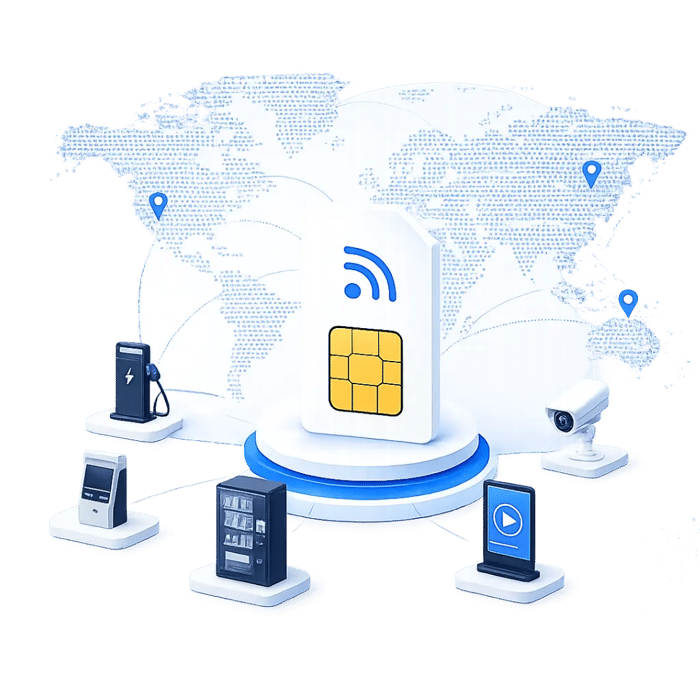
In this guide, we've highlighted several established IoT connectivity providers (in no particular order) serving businesses across North America and around the world. Each provider brings different strengths depending on deployment size, geographic footprint, technical requirements, and target industries.
This guide was prepared by POND IoT using publicly available product information reviewed in July 2026. Providers were evaluated for coverage, network flexibility, platform capabilities, support, deployment model, industry experience, and suitability for commercial IoT deployments. Because POND publishes this guide and is included in the comparison, readers should independently verify current capabilities with each provider.
Compare Providers at a Glance
What is Carrier Architecture?
Think of it as how a provider connects your devices to different cellular networks.
Some providers let your devices access multiple networks using one consistent connection, while others rely on multiple connection profiles behind the scenes.
For businesses deploying thousands of devices, this can affect how easy deployments are to manage.
Top Providers Across Industries
See who the top IoT connectivity providers are across different industries.
POS
SEE THE PROVIDERSRetail
SEE THE PROVIDERSVending
SEE THE PROVIDERS
Billboards
SEE THE PROVIDERSRVs
SEE THE PROVIDERSEVs
SEE THE PROVIDERSEnterprise
SEE THE PROVIDERSHealthcare
SEE THE PROVIDERSTransportation
SEE THE PROVIDERSAsset Tracking
SEE THE PROVIDERSAgriculture
SEE THE PROVIDERSManufacturing
SEE THE PROVIDERSOne SIM Does Not Always Mean One Connectivity Architecture
| Connectivity approach | What it means for the customer |
|---|---|
| POND: all three major U.S. carriers available through one network identity | The device can access AT&T, T-Mobile, and Verizon without changing to a separate carrier-specific identity or SIM configuration. |
| Multi-profile or multi-identity connectivity | The SIM may need to move between identities or profiles to reach different carrier groups, depending on the provider and product. |
| Single-carrier connectivity | The device remains dependent on one carrier unless another SIM, modem, profile, or connection is available. |
A SIM can be marketed as “multi-carrier” even when access to different networks depends on multiple carrier identities or profiles. POND’s U.S. architecture is different: one active network identity can access all three major U.S. carriers. This is intended to simplify deployment and reduce the operational complexity associated with profile switching.
How We Selected These Providers
There is no single "best" IoT connectivity provider for every deployment. Organizations should evaluate providers based on the size of their deployment, geographic coverage requirements, network resiliency, security needs, support model, and industry expertise.
For this guide, we considered providers based on several factors, including:
- Network coverage and carrier partnerships
- Multi-carrier connectivity options
- Device management capabilities
- eSIM support
- Private networking features
- API availability
- Customer support
- Industry experience
- Scalability
- Overall value for commercial IoT deployments
POND IoT
Best For
Organizations and solution providers that need highly customizable, multi-network connectivity, global scalability, and a high-touch partner for business-critical or wholesale IoT deployments.
Primary Industries
- Payment Terminals & POS
- EV Charging
- Smart Vending
- Micro Markets
- ATMs
- Digital Signage
- Retail
- Security & Surveillance
- Smart Lockers
- Healthcare
- Wholesale IoT
Overview
POND IoT is a global IoT connectivity provider specializing in reliable, multi-carrier cellular connectivity for commercial and enterprise deployments. With access to more than 900 carrier networks across 200+ countries and territories, POND enables businesses to deploy connected devices worldwide using a single SIM or eSIM solution.
The company is particularly well suited for organizations managing fleets of payment terminals, unattended retail devices, EV chargers, ATMs, digital signage, healthcare equipment, and other mission-critical IoT applications where uptime is essential. Beyond basic cellular connectivity, POND provides centralized tools for managing SIMs, usage, and connectivity policies, while eSIM deployments can be provisioned and managed remotely. Its current platform capabilities include real-time connection insights, event reporting, device controls such as IMEI locking and restrictions, Static IP options, VPN and routing capabilities, and integration access through REST, GraphQL, and Push APIs. POND’s Static IP solutions can also integrate with VPNs, firewalls, cloud platforms, and enterprise applications.
Unlike providers that primarily focus on large enterprise contracts or developer platforms, POND has built a strong reputation serving mid-market businesses, wholesale partners, MSPs, and solution providers looking for flexible deployment options and personalized support.
Strengths
- 900+ carrier networks in 200+ countries
- Multi-carrier SIM and eSIM connectivity
- Static IPs and Private APNs
- Wholesale and channel-friendly programs
- Flexible deployment sizes
- 24/7/365 U.S.-based support
KORE Wireless
Best For
Large enterprise IoT deployments requiring managed connectivity services across multiple regions.
Primary Industries
- Fleet Management
- Asset Tracking
- Logistics
- Healthcare
- Industrial IoT
- Connected Vehicles
- Utilities
Overview
KORE Wireless is one of the longest-established names in the IoT connectivity market, providing managed connectivity and IoT services to enterprise organizations around the world. The company supports a broad portfolio of cellular connectivity solutions, managed IoT services, lifecycle management, and professional services designed for organizations deploying large numbers of connected devices.
KORE has extensive experience working with transportation, healthcare, logistics, industrial automation, and fleet management organizations. In addition to connectivity, the company offers managed services that help businesses simplify deployment, monitor devices, and support long-term IoT initiatives.
For organizations seeking a mature enterprise platform with global reach and managed service capabilities, KORE remains a widely recognized option.
Strengths
- Established global IoT provider
- Enterprise managed services
- Broad carrier relationships
- Strong healthcare and transportation expertise
- Large-scale deployment experience
Read more
Granite Telecommunications
Best For
Large enterprises managing hundreds or thousands of locations that require fully managed networking, communications, mobility, and IT infrastructure.
Primary Industries
- Banking
- Retail
- Healthcare
- Hospitality
- Government
- Multi-site Enterprises
Overview
Granite Telecommunications is best known for delivering managed network services to multi-location businesses across North America. While its portfolio extends well beyond IoT connectivity, Granite provides wireless connectivity, failover solutions, mobility services, and managed network infrastructure that support a variety of connected business applications.
The company has built a strong presence among retailers, financial institutions, healthcare organizations, and enterprises operating hundreds or thousands of locations. Organizations looking to consolidate telecommunications, wireless connectivity, and network management under a single provider often consider Granite as part of their evaluation.
Its strengths lie in enterprise networking, branch connectivity, and managed communications rather than specialized IoT connectivity alone.
Strengths
- Extensive managed network services
- Multi-location enterprise expertise
- Strong retail and banking presence
- Wireless failover solutions
- Comprehensive communications portfolio
Read more
OptConnect
Best For
Organizations looking for fully managed cellular IoT solutions with integrated hardware, connectivity, monitoring, and support.
Primary Industries
- ATMs
- Payment Terminals
- Digital Signage
- Smart Vending
- Kiosks
- Security
- Retail
Overview
OptConnect focuses on providing managed wireless connectivity designed to simplify IoT deployments for businesses that may not have in-house networking expertise. The company bundles managed connectivity, hardware, support, and network management into a single solution, making deployment straightforward for many commercial applications.
Its solutions are commonly found in ATMs, digital signage, kiosks, payment terminals, smart vending machines, and other unattended devices that require dependable cellular connectivity.
Organizations looking for a turnkey managed solution with integrated hardware and connectivity often include OptConnect in their evaluation process.
Strengths
- Managed wireless service
- Turnkey deployment model
- Strong unattended device experience
- Integrated hardware options
- Simple deployment process
Read more
Telnyx
Best For
Businesses and developers building cloud-native applications with programmable communications, networking, and IoT connectivity.
Primary Industries
- SaaS Platforms
- Software Development
- Connected Products
- Technology Companies
- IoT Platforms
Overview
Telnyx is a cloud communications provider offering programmable voice, messaging, networking, wireless connectivity, and IoT services through an API-first platform. While widely recognized for communications infrastructure, Telnyx has expanded its wireless offerings to support IoT deployments requiring programmable connectivity and global SIM capabilities.
Its developer-centric platform makes it particularly attractive for organizations building custom applications that integrate communications, wireless connectivity, and cloud services. Businesses with strong internal development teams often value the platform's APIs and automation capabilities.
Rather than focusing exclusively on managed IoT deployments, Telnyx emphasizes flexibility, programmability, and software-driven connectivity.
Strengths
- API-first platform
- Global wireless capabilities
- Developer-friendly integrations
- Programmable communications
- Strong cloud infrastructure
Advantix
Best For
Businesses seeking managed connectivity through channel partners and value-added telecommunications services.
Primary Industries
- Retail
- Financial Services
- Transportation
- Business Services
- Channel Partners
- Enterprise Communications
Overview
Advantix provides managed telecommunications and connectivity solutions designed to help organizations simplify network management across distributed business locations. Its services include wireless connectivity, telecom expense management, mobility solutions, and managed communications for commercial customers.
The company works with organizations across retail, financial services, transportation, and other industries that require centralized visibility into their communications and connectivity infrastructure. Advantix also has experience supporting channel partners and businesses looking to streamline carrier management.
For organizations evaluating broader managed communications alongside wireless connectivity, Advantix offers a consultative approach focused on simplifying connectivity management.
Strengths
- Managed connectivity services
- Telecom expense management
- Enterprise mobility expertise
- Channel-focused solutions
- Business communications consulting
Hologram
Best For
Developer-friendly IoT deployments, rapid prototyping, and organizations looking for a self-service connectivity platform.
Primary Industries
- Asset Tracking
- Fleet Management
- Industrial IoT
- Smart Devices
- Environmental Monitoring
- Connected Products
- Logistics
Overview
Hologram is a cloud-based IoT connectivity provider known for making cellular connectivity accessible to developers, startups, and businesses building connected products. Its platform combines global SIM connectivity with an intuitive management portal, APIs, and developer tools that simplify provisioning, monitoring, and managing connected devices.
Hologram supports deployments across more than 200 countries and territories, making it a popular choice for organizations building IoT applications that require international coverage without negotiating directly with multiple carriers. Its platform is particularly well suited for companies developing connected products, proof-of-concepts, asset tracking solutions, and industrial monitoring applications.
The company emphasizes ease of deployment, transparent pricing, and developer experience, making it attractive for organizations that prefer a self-service approach to connectivity management.
Strengths
- Strong developer experience
- Intuitive SIM management platform
- Well-documented APIs
- Quick deployment for new IoT projects
- Flexible pricing options
Where POND IoT Fits in the Provider Landscape
POND IoT is best suited for organizations that need customizable, multi-network cellular connectivity for business-critical IoT deployments, as well as solution providers that want to offer connectivity through wholesale, white-label, or custom partnership models.
POND combines global cellular connectivity with its own core network infrastructure, centralized management, flexible plan design, and direct technical support. This makes it a strong fit for businesses whose requirements extend beyond a standard SIM card or predefined data plan.
Who Is POND IoT Best For?
POND IoT is a strong fit for mid-market and enterprise organizations managing connected devices across multiple locations, carrier networks, or countries. It is particularly relevant when connectivity supports transactions, remote monitoring, equipment management, customer-facing services, or other operations that cannot easily tolerate downtime.
Common POND IoT applications include payment terminals and POS systems, ATMs, EV chargers, vending machines, micro markets, kiosks, digital signage, healthcare equipment, security systems, and other distributed connected devices.
POND also works with MSPs, VARs, system integrators, OEMs, IoT platforms, and other solution providers that want to incorporate cellular connectivity into their own products or services.
When Should an Organization Choose POND IoT?
POND IoT may be the right connectivity provider when:
- Devices will operate across locations with different carrier coverage and network conditions.
- The deployment cannot depend entirely on one carrier.
- Standard data plans do not meet specific coverage, usage, security, routing, or commercial requirements.
- The business needs one provider for domestic and international connectivity.
- Connectivity must integrate with existing devices, infrastructure, or operational processes.
- The organization values dedicated account management and direct access to experienced technical support.
- A wholesale, white-label, reseller, or customized partnership model is required.
POND’s managed network infrastructure provides centralized control over SIM activity, connectivity policies, routing, access, and usage across distributed deployments. Physical SIM and eSIM options are available to support different devices and rollout requirements.
Connectivity Built Around the Deployment
Not every IoT project fits a predefined connectivity package. POND can design plans around the devices being connected, where they will operate, expected data consumption, required network services, security needs, and broader operational goals.
Plans can support local, regional, or global operations and can combine different connectivity products and services within one tailored solution. This approach is especially useful for businesses with unusual device requirements, changing deployment environments, or commercial models that do not fit a standard carrier offering.
Support for Wholesale and White-Label Connectivity
POND IoT is also designed for businesses that want to sell or incorporate connectivity rather than use it only for their own devices.
Wholesale partners can build on POND’s carrier infrastructure while maintaining control over their customer relationships and business models. White-label partners can offer connectivity under their own brand while POND provides the platform, network access, and operational support behind the scenes. Custom partnerships can also be structured around specific technical, commercial, integration, and support requirements.
This makes POND relevant not only to IoT operators, but also to managed service providers, technology vendors, equipment manufacturers, software platforms, and other companies seeking to add connectivity to an existing solution.
Direct Support Throughout the IoT Deployment
POND’s service model is built around direct collaboration rather than a purely self-service experience. Customers have access to 24/7 global support and dedicated account management, with complex situations able to be escalated when additional technical or operational involvement is needed.
This approach can be valuable for organizations that want assistance evaluating coverage, testing devices, structuring a rollout, troubleshooting connectivity, or adapting the solution as deployment requirements change.
Questions to Ask Before Choosing an IoT Connectivity Provider
Before selecting a provider, businesses should ask:
- Which carrier networks can my devices access in the locations where they will operate?
- What happens if the current network becomes unavailable?
- Can the connectivity plan be tailored to my devices, data usage, security requirements, and business model?
- How will my team monitor SIMs, usage, and connectivity after deployment?
- What technical support is available when a device or connection stops working?
- Will I have a dedicated contact who understands my deployment?
- Can the provider support domestic and international expansion?
- Are wholesale, white-label, or reseller options available?
- Can the solution adapt as my technical or commercial requirements change?
POND IoT is most differentiated when an organization needs more than basic cellular service: multi-network access, customized connectivity, managed network infrastructure, direct support, or a partnership model built around its business.
Frequently Asked Questions
Request a Free Network and Coverage Review
If you're evaluating IoT connectivity providers, we'd be happy to learn more about your deployment and discuss whether POND IoT is the right fit.
Whether you're planning a new rollout, replacing an existing provider, or expanding into new markets, our team can help you evaluate your options and build a connectivity strategy tailored to your business.
👉 Contact us to speak with an IoT connectivity specialist.