



Top Asset Tracking Providers
Comparing Integrated Tracking Programs, Flexible Cellular Connectivity and Supporting Enterprise Infrastructure
Asset tracking is not one technology category.
A hardwired vehicle tracker, a battery-powered container tracker and a gateway monitoring refrigerated cargo may all report location, but they have very different power, bandwidth, coverage and recovery requirements.
The provider also may not own the same part of every deployment.
One organization may want devices, tracking software, connectivity and deployment support coordinated through a broader IoT program. Another may already have approved trackers, firmware and a customer-facing platform and only need a better cellular layer. A large enterprise may already use a tracking application but need the warehouses, depots, branches and mobile workforce behind it managed consistently.
This guide compares three providers whose roles differ:
- KORE Wireless combines global IoT connectivity with location-based services, fleet capabilities and broader device-enablement support.
- POND IoT provides multicarrier cellular and global eSIM connectivity for compatible third-party trackers, gateways and asset-monitoring platforms.
- Granite Telecommunications supports the facilities, mobility estate and enterprise communications environment surrounding large distributed asset operations.
The useful buying question is:
Are we assembling the tracking program, improving the connectivity behind existing trackers or standardizing the enterprise operation that relies on the data?
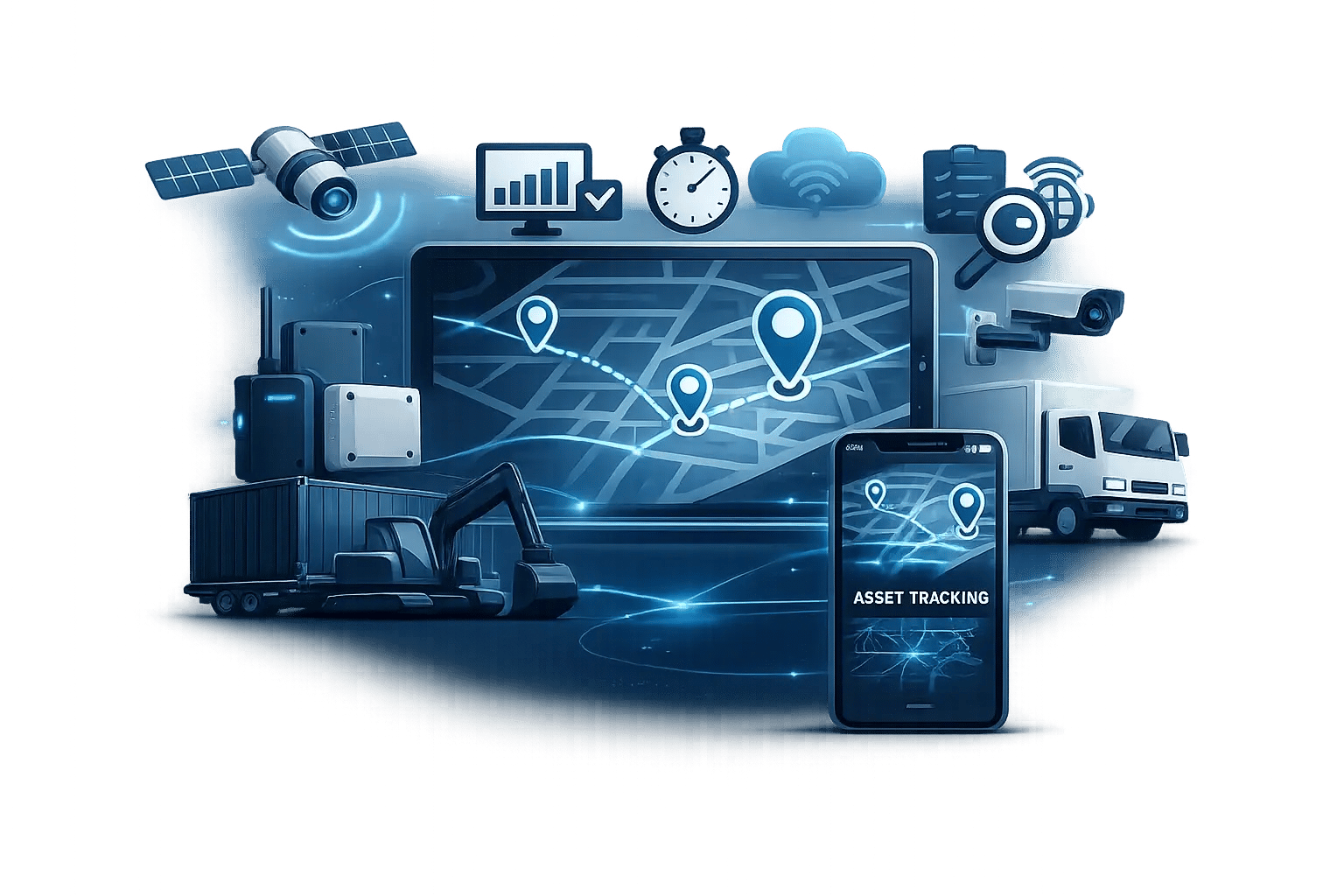
Quick Answer: Which Asset Tracking Provider Model Fits Best?
KORE Wireless
Best for Broader Asset Tracking and Fleet-IoT Programs
KORE is the most natural starting point in this comparison when the organization wants connectivity coordinated with location-based applications, fleet services, hardware and deployment support.
Its current portfolio includes global IoT connectivity, vehicle and asset tracking, telematics, geofencing, reporting and location-based services. KORE also documents integrated packages that combine tracking devices, cellular connectivity and a tracking or fleet-management application.
The requirement usually sounds like:
“We do not want to assemble every part of the asset-tracking program ourselves.”
KORE becomes especially relevant when device sourcing, preparation, fleet applications or lifecycle coordination matter alongside connectivity.
POND IoT
Best for Cellular Connectivity Behind Existing Trackers and Platforms
POND is the stronger fit when the organization already has—or wants to choose—its own trackers, firmware and tracking application.
POND provides the cellular path carrying location, condition and sensor data from compatible third-party devices to the customer’s platform. Its current infrastructure supports multicarrier access, Multi-IMSI connectivity, global APNs, eSIM and centralized management across international deployments.
The requirement usually sounds like:
“We already have the tracking product. We need connectivity that can operate across carriers and countries without tying us to one hardware or software platform.”
POND is particularly relevant when network flexibility, existing-hardware support, private networking, APIs or direct technical collaboration are priorities.
Granite Telecommunications
Best for the Enterprise Operation Supporting Asset Visibility
Granite enters the comparison from the infrastructure side.
It is relevant when asset tracking is part of a larger distributed operation involving warehouses, depots, service branches, dispatch centers, field employees and mobile devices.
Granite’s current portfolio includes managed networking, wireless data, mobile-device and plan administration, field services, equipment deployment and North American rollout support.
The requirement usually sounds like:
“We already use a tracking platform, but the locations and mobile operations behind it are fragmented.”
Granite does not need to replace the asset-tracking application to have a meaningful role. Its value is keeping the wider operating environment connected and supportable.
Asset Tracking Connectivity Providers at a Glance
KORE, POND and Granite address different parts of an asset-tracking deployment.
KORE combines connectivity with broader tracking, fleet and device services. POND provides a flexible cellular layer for organizations that want to retain control of their trackers and software. Granite manages the enterprise network and mobility environment from which distributed asset operations are run.
| Provider | Primary Asset-Tracking Connectivity Differentiator | Best-Suited Requirement |
|---|---|---|
| KORE Wireless | Global IoT connectivity combined with location-based services, fleet applications, device enablement, centralized administration, hardware preparation, deployment support and broader lifecycle capabilities | Organizations that want connectivity coordinated with tracking software, compatible devices, fleet or asset-management capabilities and broader deployment or lifecycle services |
| POND IoT | Flexible multicarrier cellular and global eSIM connectivity, compatible-tracker support, configurable network policies, centralized SIM management, APIs, private networking, static IP options, secure remote access and direct technical guidance | Tracking providers, manufacturers and asset operators that already have—or want to select—their own trackers, gateways and applications and need adaptable connectivity behind those systems |
| Granite Telecommunications | Managed networking, mobility administration, equipment rollout, field services, wireless backup and service-provider consolidation across distributed enterprise locations | Large organizations whose asset-tracking operations depend on connected warehouses, branches, depots, dispatch centers, field employees and a consistently managed enterprise communications environment |
How This Comparison Was Built
This guide focuses on the responsibilities that materially change an asset-tracking deployment:
- Tracking hardware and software
- Cellular connectivity
- Multicarrier behavior
- Global eSIM
- Existing-device compatibility
- Location and sensor-data delivery
- APIs and provisioning
- Private networking
- Device preparation and logistics
- Facility connectivity
- Mobile-device administration
- Field support
- Incident ownership
- Long hardware lifecycles
It does not rank providers using temporary pricing, generalized coverage maps or vague claims about “real-time” tracking.
Performance depends on the asset, tracker, modem, antenna, power source, reporting policy, available networks, installation, application and operating process.
Editorial Disclosure
This guide is published by POND IoT, which is included in the comparison.
KORE is evaluated around broader tracking and device programs. POND is evaluated around cellular connectivity for third-party tracking systems. Granite is evaluated around the enterprise environment supporting distributed asset operations.
Start With What the Provider Must Own
The Organization Wants the Program Assembled
A company may need devices, connectivity, tracking applications, geofences, reports, deployment preparation and ongoing administration.
Its problem is not simply finding a SIM.
It is coordinating the whole program without creating a collection of separate vendors and support boundaries.
KORE’s integrated location-based and fleet model is well aligned with that requirement. Its published materials describe turnkey combinations of tracking devices, cellular service and fleet or asset-tracking applications.
The Tracking Product Already Exists
A tracking provider may have spent years developing:
- Approved hardware
- Custom firmware
- Customer dashboards
- Alert logic
- APIs
- Installation methods
- Support processes
Replacing that product merely to change carriers would be expensive and unnecessary.
POND fits behind this existing stack. The company can keep its tracker and platform while evaluating multicarrier connectivity, global eSIM and network-management options separately.
Tracking Is Part of a Larger Distributed Operation
A national rental, logistics or field-service company may already have a suitable tracking platform.
Its operational problems may be elsewhere:
- Unreliable branch connectivity
- Different network standards at each depot
- Fragmented mobile plans
- Limited onsite technical support
- Difficult equipment rollouts
- Too many service providers and escalation paths
Granite becomes relevant because the asset data is only useful when the people, facilities and mobile teams acting on it can reach the required systems.
A Location Fix Is Not the Same as Asset Visibility
A tracking device typically performs several separate functions.
It determines or collects information about the asset, establishes a network connection, sends the data to a backend and relies on an application to process and display it.
A failure can occur at any point.
A tracker may:
- Have cellular service but no current GNSS position
- Have a valid position but no data connection
- Store records while offline
- Repeat an old location
- Lose vehicle or equipment power
- Send data that the platform rejects
- Report location while a connected sensor has failed
- Cross a geofence without producing an actionable alert
A useful asset-tracking program monitors six layers:
- Asset data: Is the device producing credible location or sensor information?
- Power: Is the tracker operating normally?
- Connection: Does it have a usable data path?
- Delivery: Did the backend receive the message?
- Freshness: Is the information current enough for the decision?
- Action: Did the alert or workflow reach the responsible person?
The most important field on an asset map is often not the coordinate.
It is the timestamp.
Where Asset Tracking Breaks
Tracking failures often cluster around predictable environments:
- Indoor warehouses
- Underground parking
- Steel containers
- Enclosed trailers
- Ports and rail yards
- Border crossings
- Rural service areas
- Construction sites
- Equipment stored beside large structures
- Assets left without external power
- Poor antenna placement
- Damaged power wiring
- Devices configured to report too infrequently
A fleet may have excellent average coverage and still lose visibility at the loading dock where assets change custody.
A container tracker may function well outdoors but lose usable satellite visibility once loaded beneath other containers.
A refrigerated trailer may continue reporting its position while its temperature sensor has stopped updating.
These are not identical problems, and they should not use identical monitoring rules.
Five Mistakes Companies Make With Asset Tracking
1. Treating Every Asset as the Same Connectivity Use Case
A powered vehicle tracker can report frequently and recover quickly after losing coverage.
A sealed battery-powered tracker may need to remain deployed for years. It may report only after movement, at scheduled intervals or during an alarm.
A video gateway has an entirely different bandwidth profile.
Before selecting connectivity, define:
- Power source
- Reporting interval
- Data volume
- Environmental conditions
- Asset movement
- Expected service life
- Cost of delayed information
One generic plan rarely fits every asset type.
2. Using “Real Time” Without Defining It
Real time may mean ten seconds, five minutes or one update per hour.
The acceptable interval depends on the business event.
A five-minute-old location may be adequate for a waste container. It may be unacceptable during theft, cargo tampering or an unauthorized equipment movement.
Define:
- Update frequency while moving
- Update frequency while stationary
- Alert latency
- Offline buffering
- Recovery time
- Timestamp presentation
Without those definitions, “real-time tracking” is marketing language rather than a requirement.
3. Selecting Hardware Before Understanding Power and Coverage
Battery-life claims depend on assumptions about reporting frequency, temperature, signal conditions and network-registration activity.
A tracker searching repeatedly for service may consume more power than expected. A unit placed inside metal equipment may need a different antenna or installation location.
Hardware selection should follow the operating conditions—not precede them.
4. Monitoring the SIM Instead of the Asset Data
An active SIM session proves only that the modem has a network connection.
It does not prove that:
- The location is current
- The sensor is working
- The tracker has stable power
- Buffered data was delivered
- The application processed the message
- An alert reached operations
The monitoring threshold should reflect the asset workflow. A vehicle may become stale after several minutes, while stationary equipment may legitimately remain silent for hours.
5. Buying an Integrated Bundle Without an Exit Plan
An integrated program can reduce implementation work, but it may also connect the hardware, software and cellular relationship more tightly.
Before choosing that model, determine:
- Who owns the data
- Whether historical records can be exported
- Whether APIs are included
- Whether devices are locked
- Whether the tracker can use another SIM
- Whether connectivity can change without replacing hardware
- What migration would require
Integration is valuable. Portability is also valuable. The appropriate balance depends on the organization.
KORE Wireless
Asset Tracking Within a Broader IoT Program
KORE is well aligned with organizations that want connectivity combined with location-based services and additional device support.
Its current fleet portfolio covers vehicle tracking, location intelligence, telematics and operational data. KORE’s Location-Based Services materials also describe integrated packages combining tracking devices, cellular connectivity and an application for personal, asset or fleet tracking.
That model can reduce the amount of integration a customer must perform itself.
When the Integrated Model Helps
The model is useful when the organization needs several of the following coordinated:
- Tracking application
- Devices
- Cellular connectivity
- Geofences and alerts
- Historical reporting
- Fleet telematics
- Hardware preparation
- Deployment logistics
- Centralized administration
The exact proposal still matters. Buyers should confirm which software, hardware and support functions are included rather than assuming every KORE capability comes with every service.
More Than a Map
Asset location may be only one part of the operational requirement.
A fleet or equipment program may also need:
- Utilization
- Maintenance information
- Driver behavior
- Route history
- Dispatch data
- Video events
- Condition monitoring
- Customer reporting
KORE’s fleet and asset materials position connectivity as part of a wider operational-visibility program rather than as a standalone data plan.
Hardware and Deployment Support
Large programs frequently struggle with hardware operations before connectivity becomes the issue.
Devices may need to be sourced, configured, labeled, assigned, shipped, replaced and returned.
KORE has documented supporting tracking providers with connectivity consolidation and hardware sourcing, and its broader IoT platform includes device-management and deployment capabilities.
This is useful when the organization wants one provider involved beyond the network connection.
Where KORE Makes Sense
KORE is the clearest fit when the organization wants:
- Connectivity and tracking applications coordinated together
- A broadly integrated fleet or asset program
- Location-based services beyond raw data transport
- Hardware and device-enablement support
- Global deployment capabilities
- Centralized administration
- Broader lifecycle coordination
POND IoT
Cellular Connectivity for Third-Party Trackers and Platforms
POND provides the connectivity layer behind compatible asset trackers, telematics gateways and monitoring systems.
It does not replace the customer’s tracking application.
That makes POND relevant to companies that want to retain control over:
- Tracker selection
- Firmware
- Platform design
- Alert logic
- Customer experience
- Device ownership
- Data ownership
- Future software changes
Keeping Connectivity Independent
A tracking-platform provider may already have a complete product.
Its customers know the interface. Its support team understands the devices. Its backend has been built around specific message formats and workflows.
The company may simply need better network flexibility as its deployments expand across carriers, regions or countries.
POND allows the connectivity relationship to be evaluated separately from the tracking software.
That separation can make it easier to change the cellular strategy without rebuilding the tracking product.
Multicarrier Connectivity
POND’s current platform supports multi-network and Multi-IMSI connectivity, allowing compatible devices to use participating networks without being permanently limited to one carrier relationship. It also provides centralized management and global APN infrastructure.
This can be useful when trackers operate across:
- Different customer locations
- Rural and urban environments
- Mobile routes
- Ports and yards
- Multiple countries
- Areas where one carrier performs inconsistently
The practical evaluation should ask:
- Which networks are available to the device?
- How does network selection occur?
- Can policies or preferences be adjusted?
- What happens after complete coverage loss?
- Does the tracker store data while offline?
- How quickly does it deliver buffered records?
Additional networks create more options. They do not replace good hardware, firmware and installation.
Support for Existing Devices
POND can be evaluated with compatible third-party trackers, gateways and embedded cellular modules.
Compatibility should be confirmed using the exact:
- Modem
- Firmware
- Frequency bands
- Carrier certifications
- SIM or eSIM format
- Country
- Antenna configuration
The advantage is not that every tracker works automatically.
It is that organizations are not required to abandon compatible approved hardware merely to obtain a different connectivity model.
Global eSIM
POND supports eSIM and global multi-network deployments, including remote provisioning and profile-management capabilities for compatible hardware. Its public materials describe service across more than 200 countries and hundreds of networks.
This can be valuable when trackers are:
- Manufactured centrally
- Distributed internationally
- Difficult to access after installation
- Expected to remain deployed for years
- Likely to need network changes during their lifecycle
The buyer should verify the exact profiles, countries, roaming conditions and hardware support required.
APIs and Connectivity Administration
Connectivity administration can be integrated into a tracking provider’s own workflow.
Typical actions include:
- Activating a newly installed tracker
- Suspending spare inventory
- Retrieving usage
- Checking SIM status
- Grouping devices by customer
- Setting data alerts
- Replacing failed equipment
- Separating pilots from production
POND’s current platform emphasizes centralized control of SIM activity, usage and connectivity policies across distributed deployments.
The relevant measure is how much manual work the integration removes.
Private Networking and Remote Access
Some asset deployments require controlled access to gateways or equipment behind them.
Examples include:
- Vehicle routers
- Refrigeration controllers
- Camera systems
- Diagnostic gateways
- Industrial equipment
- Edge computers
Depending on the configuration, the connectivity architecture may use private APNs, VPNs, static addressing, segmented device groups or restricted remote access.
These features support the network design. They do not replace authentication, encryption, firmware management, logging or access controls.
Where POND Makes Sense
POND is the clearest fit when the organization wants:
- Connectivity for third-party trackers
- Multicarrier network access
- Global eSIM
- Support for compatible existing hardware
- Independence from the tracking application
- Centralized SIM and usage administration
- Configurable network policies
- APIs and provisioning workflows
- Private-networking options
- Direct technical collaboration
Granite Telecommunications
The Infrastructure Around the Tracking Operation
Granite’s role is different from KORE’s and POND’s.
It is not positioned here as a replacement for the tracking platform. It becomes relevant when asset visibility depends on a large network of facilities, mobile employees and supporting communications services.
A distributed operation may include:
- Warehouses
- Rental branches
- Maintenance depots
- Dispatch centers
- Distribution facilities
- Field employees
- Tablets and smartphones
- Mobile hotspots
- Local routers and backup connections
The trackers may continue sending data while an operations center loses the ability to view or act on it.
Facility and Mobility Operations
Granite offers managed networking, wireless data and enterprise mobility administration. Its mobility services cover device and plan management, logistics and inventory-related functions, while its field-services operation supports equipment rollouts and onsite work.
This is useful for companies whose tracking program sits inside a much larger communications environment.
Field Support
A distributed asset operation may need technicians to:
- Install or replace routers
- Repair facility cabling
- Support new branches
- Mount antennas
- Replace failed network equipment
- Investigate local connectivity problems
Granite states that its North American field organization supports large rollouts, equipment replacement and technician dispatch across distributed footprints.
Where Granite Makes Sense
Granite is the clearest fit when the organization needs:
- Network standardization across tracking-related facilities
- Mobile-device and plan administration
- Internet and wireless backup
- Equipment deployment
- National onsite support
- Provider and billing consolidation
- A managed enterprise environment supporting a separate asset-tracking platform
Which Provider Model Fits Each Asset Tracking Requirement?
| Asset-tracking requirement | Provider most closely aligned |
|---|---|
| Integrated tracking application, devices and cellular connectivity | KORE Wireless |
| Location-based services, geofences, alerts and operational reporting | KORE Wireless |
| Fleet telematics coordinated with broader asset-tracking capabilities | KORE Wireless |
| Hardware sourcing, device preparation, staging, labeling and kitting | KORE Wireless |
| Device testing, carrier-certification support and deployment preparation | KORE Wireless |
| Centralized administration across customers, fleets, product lines and regions | KORE Wireless |
| Forward and reverse logistics for tracking hardware and replacement devices | KORE Wireless |
| Long-term device lifecycle, replacement and network-transition planning | KORE Wireless |
| Asset-tracking programs requiring connectivity coordinated with broader device and deployment services | KORE Wireless |
| Cellular connectivity for compatible existing asset trackers | POND IoT |
| Multicarrier access across changing coverage environments, routes and operating regions | POND IoT |
| Connectivity independent of the tracking application or hardware vendor | POND IoT |
| Connectivity designed around compatible existing trackers, gateways and embedded modems | POND IoT |
| Customer-directed network policies and adaptable carrier-selection behavior | POND IoT |
| Connectivity for trailers, containers, heavy equipment and other distributed assets | POND IoT |
| Connectivity for powered trackers, battery-powered devices and sensor gateways | POND IoT |
| Private APNs, VPNs, static IP options and controlled remote access | POND IoT |
| Centralized SIM administration, APIs and custom provisioning workflows | POND IoT |
| Global eSIM connectivity for domestic and international asset deployments | POND IoT or KORE Wireless, depending on the required operating model |
| Direct technical guidance for a tracking provider, manufacturer or asset-operations team | POND IoT |
| Complete networking across warehouses, branches, depots and dispatch centers | Granite Telecommunications |
| Broadband and dedicated internet aggregation across distributed asset-operation locations | Granite Telecommunications |
| Managed SD-WAN or SASE across a distributed enterprise network | Granite Telecommunications |
| Structured cabling, Wi-Fi deployment, equipment installation and onsite network work | Granite Telecommunications |
| Mobile-device and plan administration for field employees and operations teams | Granite Telecommunications |
| Equipment rollout, hardware replacement and technician dispatch across distributed locations | Granite Telecommunications |
| Standardizing newly acquired, rapidly expanding or operationally inconsistent facilities | Granite Telecommunications |
| Consolidation of multiple local access providers, invoices and support relationships | Granite Telecommunications |
| Asset-tracking operations supported within a broader managed communications environment | Granite Telecommunications |
This table maps common asset-tracking requirements to the provider most closely aligned with each need. It is not a ranking of location accuracy, network reliability, support quality or overall value. POND and KORE both offer global cellular and eSIM capabilities; the distinction is generally whether the organization prioritizes an independent and configurable cellular layer for existing trackers or a broader program combining connectivity with tracking, device and deployment services. Actual capabilities may vary by service, country, carrier, hardware, firmware, installation, configuration, deployment scope and commercial agreement.
Choosing by Asset Type
Vehicles and Powered Equipment
Hardwired devices can usually report more frequently because they are not relying entirely on an internal battery.
KORE is relevant when location forms part of a wider fleet-management program.
POND is relevant when the organization already has selected trackers or telematics gateways and needs a flexible cellular layer behind them.
Granite supports the dispatch centers, depots and mobile workforce surrounding the fleet.
Trailers and Containers
These assets may spend long periods without external power and may operate inside metal enclosures or stacked environments.
The design should prioritize:
- Battery life
- Motion-based reporting
- Offline storage
- Antenna placement
- Cross-border connectivity
- Timestamp visibility
- Recovery after coverage loss
The provider model depends on whether the organization wants the tracking program assembled or already has a selected tracker and platform.
Construction and Heavy Equipment
Construction assets may remain idle for weeks and then move without notice.
Tracking may support:
- Theft detection
- Utilization
- Engine hours
- Geofences
- Maintenance
- Location history
A battery-powered tracker attached to a portable generator should not use the same reporting policy as a powered gateway inside an excavator.
Refrigerated and Condition-Sensitive Assets
Cold-chain monitoring requires more than location.
The organization may also need current temperature, humidity, door status or refrigeration-controller data.
A current location paired with an hour-old temperature reading is not complete visibility.
Monitoring rules should therefore evaluate each critical sensor independently.
Reusable and Portable Assets
Tools, pallets, waste containers and reusable transport items may have lower individual value but create substantial operational cost when misplaced at scale.
These deployments often need to balance:
- Device cost
- Battery life
- Reporting frequency
- Recovery value
- Installation effort
- Data-plan cost
The economically correct design may deliberately report less frequently than a vehicle-tracking system.
Theft-Recovery Applications
The most important moment in a theft-recovery deployment is the transition from normal storage to unauthorized movement.
The tracker may need:
- Independent power
- Covert placement
- Motion activation
- Rapid reporting
- Reliable network recovery
- Restricted access
- Clear escalation
A device that works perfectly during ordinary testing may still fail if the theft workflow has not been tested end to end.
Security and Data Ownership
Asset-tracking data can reveal:
- Vehicle movements
- Employee activity
- Delivery routes
- Customer locations
- High-value equipment positions
- Facility patterns
- Inventory and utilization
The deployment should define:
- Who owns the data
- Who can view current locations
- Who can access history
- How long records are retained
- Whether exports are logged
- How API credentials are scoped
- Where traffic is routed
- How devices are segmented
- What happens when an asset changes ownership
- How access is removed when an employee leaves
A private APN or VPN may support the architecture, but it does not replace encryption, authentication, logging and governance.
Technical Evaluation Checklist
Define the Asset
Document:
- Asset type
- Power source
- Mobility pattern
- Indoor and outdoor use
- Countries
- Environmental conditions
- Theft risk
- Expected device life
Define the Information Requirement
Confirm:
- Moving update interval
- Stationary update interval
- Maximum acceptable alert delay
- Required location accuracy
- Sensor requirements
- Offline-storage behavior
- Historical-retention needs
- What makes data “stale”
Validate the Hardware
Confirm:
- GNSS capabilities
- Cellular modem
- Supported bands
- Certifications
- SIM or eSIM format
- Antenna design
- Battery assumptions
- Environmental rating
- Sensor inputs
- Firmware ownership
Validate Connectivity
Confirm:
- Available networks
- Multicarrier behavior
- Network-selection controls
- Roaming rules
- eSIM profiles
- Recovery after coverage loss
- Data-routing locations
- Private-networking options
- Network-sunset planning
Validate the Application
Confirm:
- Stale-data indicators
- Geofences
- Alert delivery
- Historical reporting
- Role-based access
- API access
- Data export
- Audit history
- Customer separation
- Integration options
Define Incident Ownership
Confirm:
- Who checks the SIM
- Who checks the tracker
- Who diagnoses location failures
- Who investigates sensor problems
- Who opens carrier tickets
- Who replaces hardware
- Who investigates application failures
- Who confirms recovery
Questions to Ask Providers
- Which parts of the asset-tracking program do you provide?
- Can we retain our existing compatible trackers?
- Which networks and countries are available?
- How does multicarrier selection work?
- Which eSIM profiles are currently available?
- What happens when the tracker loses coverage?
- Is data stored locally while offline?
- How is stale information identified?
- How are battery-life estimates calculated?
- Are APIs included?
- Who owns the tracking data?
- Can historical records be exported?
- Can devices move to another platform or connectivity provider?
- Are private APNs, VPNs or static IPs available?
- Is hardware sourcing or staging available?
- Who handles failed equipment?
- Who manages carrier escalation?
- Can the pilot use our real assets, hardware and reporting policies?
Final Assessment
KORE, POND and Granite address different layers of asset tracking.
KORE Wireless fits organizations that want connectivity coordinated with location-based applications, devices, fleet services and broader deployment support.
POND IoT fits tracking providers, manufacturers and asset operators that already have—or want to select—their own trackers and software but need multicarrier cellular connectivity, global eSIM and greater independence at the network layer.
Granite Telecommunications fits distributed enterprises that need the facilities, mobility estate and field-support environment behind the tracking operation managed consistently.
The right choice depends on what the provider is expected to own:
The wider tracking program, the cellular path behind the trackers or the enterprise operation acting on the data.
Frequently Asked Questions
KORE is the clearest starting point in this comparison when the organization wants tracking applications, devices, connectivity and broader deployment services coordinated together. Its official location-based services materials describe integrated tracking packages combining those components.
POND is a strong fit when the organization already has compatible trackers, firmware and an application but needs multicarrier connectivity, global eSIM, centralized management or private-networking options.
POND’s role on this page is providing cellular connectivity for compatible third-party trackers, gateways and tracking platforms.
It does not replace the customer’s asset-tracking application.
Granite’s role is enterprise networking, managed mobility, device administration and field support.
It becomes relevant when the wider operation surrounding a separate tracking platform needs to be standardized and managed.
Yes. Both providers support international cellular and eSIM deployments. POND emphasizes flexible multi-network connectivity and centralized network administration, while KORE combines global connectivity with a broader portfolio of location-based and device services.
No.
The modem may be connected while the tracker lacks a current position, has lost power, is buffering messages or has stopped communicating with the application.
No.
The correct reporting policy depends on power, movement, operational value and how quickly the organization needs to act.
No.
Some deployments use GNSS, while others may also use cellular positioning, Wi-Fi, Bluetooth, RFID or nearby gateways. The right method depends on the environment and required accuracy.
Build the Right Connectivity Architecture for Your Asset Trackers
POND can help evaluate:
- Connectivity for third-party asset trackers
- Multicarrier IoT SIMs
- Global eSIM
- Compatible existing tracking hardware
- Telematics gateways
- Embedded cellular modules
- Vehicle and trailer trackers
- Container-tracking devices
- Heavy-equipment monitoring
- Refrigeration and sensor gateways
- Private APNs
- VPN architectures
- Static IP options
- Secure remote access
- APIs and provisioning
- Domestic and international deployments
- Network-selection policies
- Data-plan requirements
- Support and escalation responsibilities
Is Connectivity Limiting the Reliability of Your Asset Tracking Platform?
Tell us about your trackers, modem hardware, application, reporting requirements and operating regions. A POND specialist will help evaluate multicarrier connectivity, global eSIM, hardware compatibility, private networking, provisioning and network behavior.