


Multi-Carrier
Connectivity for
Digital Signage & DOOH
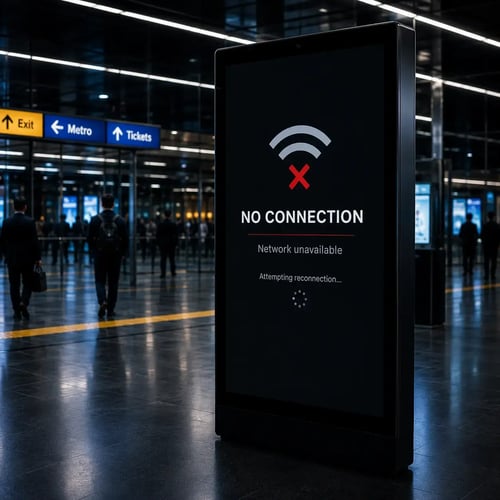
Why Digital Signage Connectivity Fails
-
Single-carrier SIMs losing coverage in certain locations
-
Signal variability inside malls, airports, transit hubs, or dense urban environments
-
Network congestion during peak traffic periods
-
Wired internet instability or unavailable infrastructure
-
No automatic failover when the primary connection fails
How POND IoT Keeps Digital Signage Online
Automatically switches across available LTE and 5G networks to maintain uptime across changing coverage conditions.
How Digital Signage Connectivity Infrastructure Works
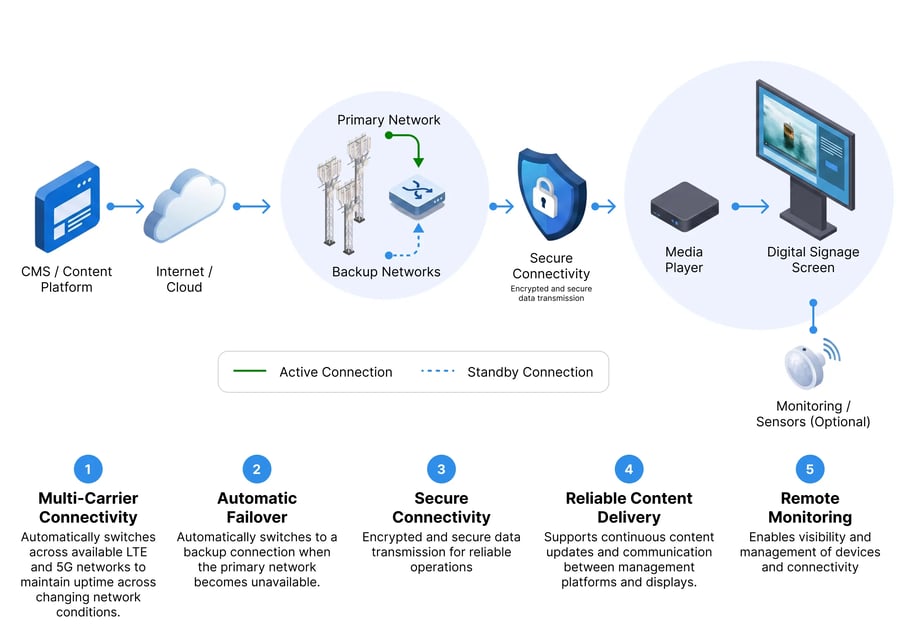
Built for Real-World Digital Signage Deployments
Digital signage deployments rely on stable connectivity for content delivery, remote management, and real-time updates across distributed environments.Centralized screen and campaign management
Why Multi-Carrier Connectivity Matters for Digital Signage
Single-carrier connectivity can create coverage limitations and downtime risks in distributed digital signage deployments. Multi-carrier connectivity maintains uptime across changing network conditions.
| POND IoT Multi-Carrier SIM | Single-Carrier SIM | |
|---|---|---|
| Carrier outage protection | Automatic switching across available networks | Connectivity depends on one carrier |
| Coverage consistency | Access to multiple carrier networks | Coverage varies by carrier availability |
| Performance in congested areas | Better network availability across locations | Connectivity can degrade during peak traffic |
| Rural and remote deployments | More reliable deployment coverage | Greater risk of coverage gaps |
| Digital signage uptime | More resilient connectivity continuity | Higher risk of screen interruptions |
| Connectivity failover | Automatic backup connectivity | Limited or unavailable |
| Distributed deployments | Better support for distributed environments | More dependent on local network conditions |
| Long-term operational stability | More stable long-term connectivity | Greater exposure to network disruptions |
Estimate Potential Savings from Improved Connectivity
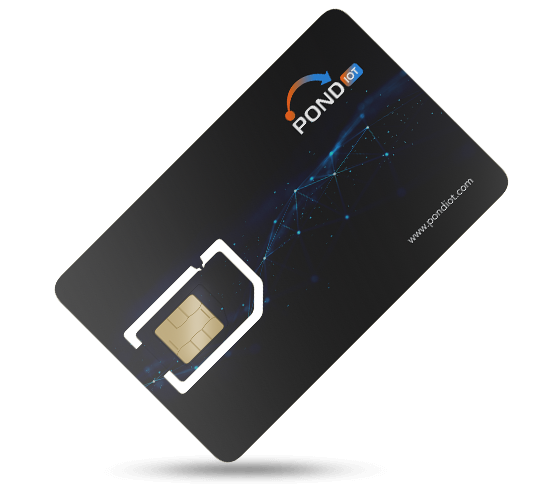
Multi-Carrier SIMs for Digital Signage Devices
Multi-carrier SIMs provide cellular connectivity for media players, routers, kiosks, menu boards, and digital signage displays. They allow devices to remain connected across changing network conditions without relying entirely on wired internet infrastructure.
- Embedded LTE and 5G connectivity
- Physical SIM and eSIM support
- Faster deployment across distributed locations
- Connectivity for indoor, outdoor, and temporary installations
Internet Failover for Digital Signage
When digital signage depends on a primary wired or fixed internet connection, LTE/5G can provide a secondary path if that connection goes down.
With Internet Failover, signage deployments can:
- Automatically switch to cellular backup
- Continue content updates and remote access
- Reduce disruption during primary internet outages
- Support both single locations and distributed signage networks
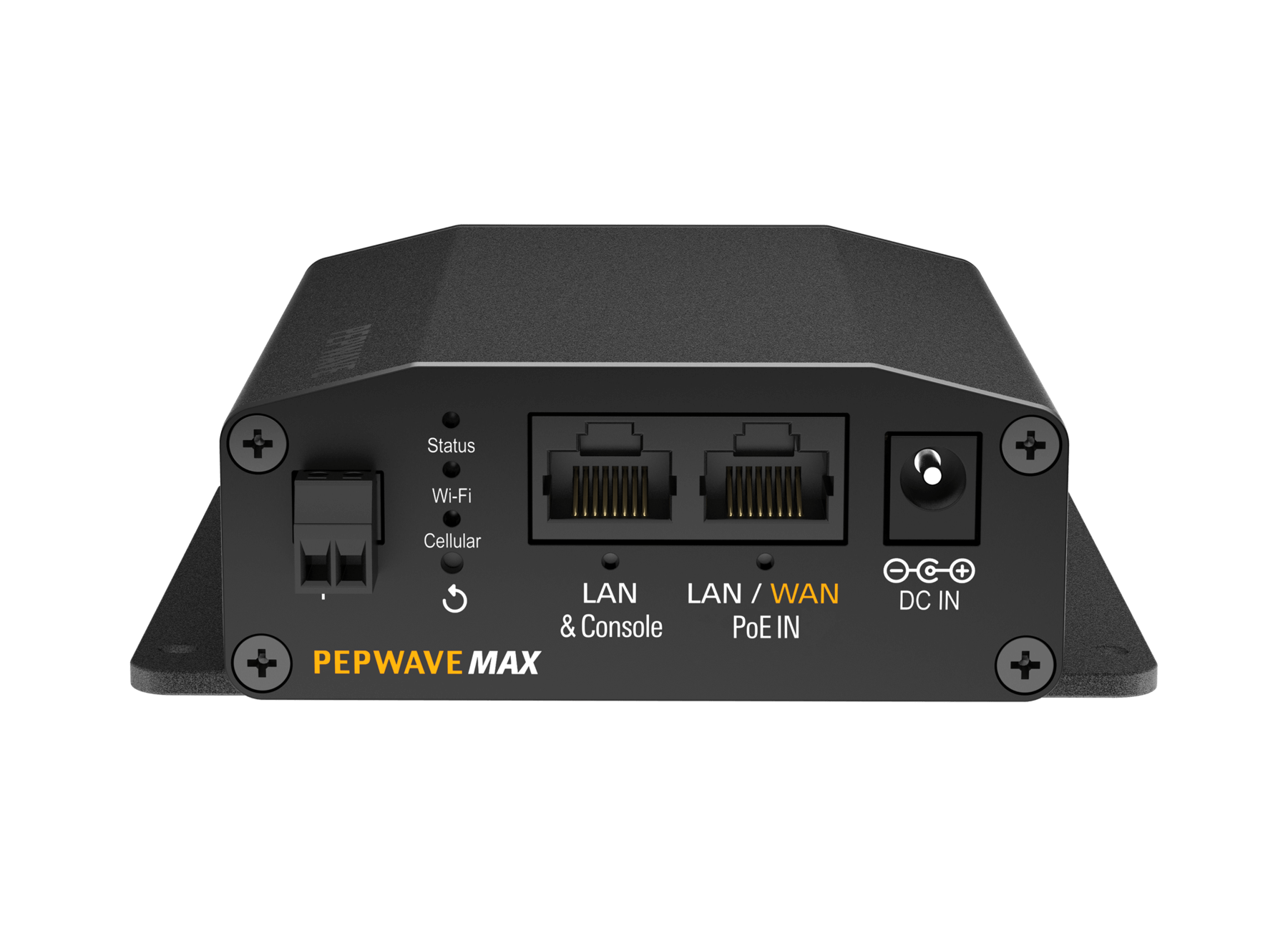
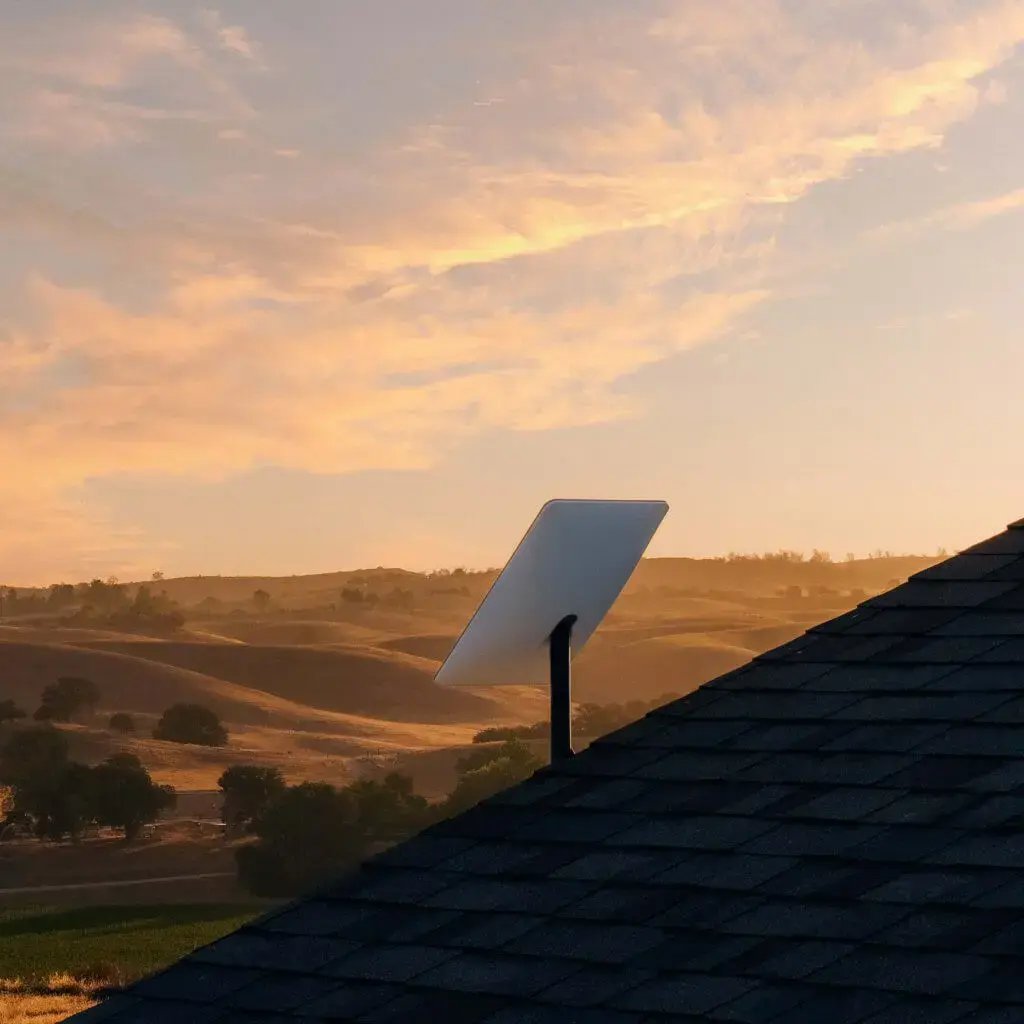
Starlink + Peplink for Remote Digital Signage
Starlink and Peplink solutions support digital signage deployments in locations where traditional wired connectivity is unavailable or unreliable. Combined with cellular failover, they maintain connectivity across remote, outdoor, and temporary environments.
- Hybrid satellite and cellular connectivity
- Automatic failover between connection types
- Support for remote and hard-to-reach locations
- Reliable connectivity for outdoor digital signage and DOOH
Discuss Your Digital Signage Deployment
Frequently Asked Questions
Answers to common questions about digital signage connectivity, uptime, failover, and remote deployment management with POND IoT.Operators can remotely update content, monitor device status, and manage distributed signage deployments across multiple locations from a centralized platform.
Outdoor digital signage deployments commonly use Multi-Carrier LTE and 5G connectivity with automatic failover support. This helps maintain uptime across changing network conditions and distributed environments.
Related Resources
.webp?width=300&name=digital%20signage%20(night).webp)