

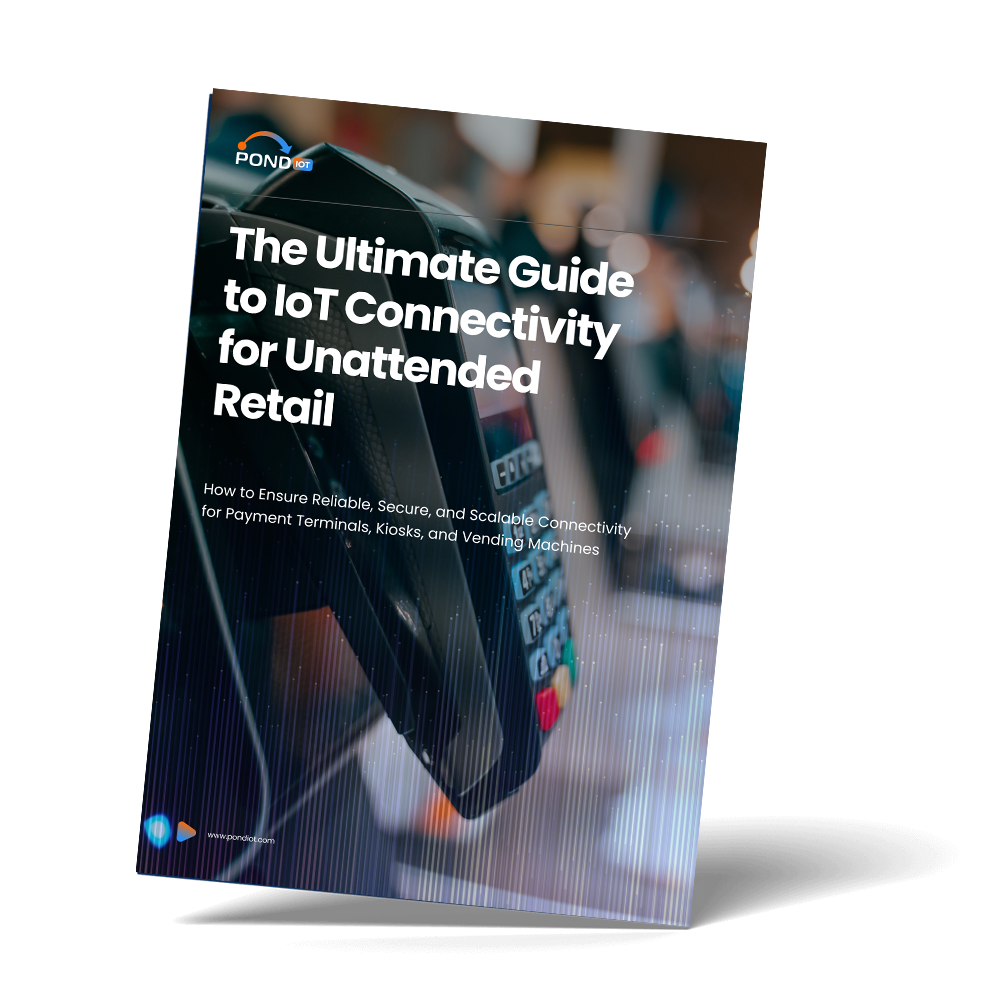

Reliable Cellular
Connectivity for
Vending Machines
Why Vending Connectivity Fails
A vending machine without connectivity is no longer operational as a transaction endpoint. Card transactions fail, machine status becomes unavailable, and operators lose visibility into inventory, alerts, and device activity.
Common causes of vending connectivity disruptions include:
-
Coverage varies between locations
-
Indoor environments create signal instability
-
Carrier congestion disrupts transactions
- Single-carrier dependency limits network options
-
No secondary connection is available during outages
Even short outages can interrupt sales, delay service response, and reduce operational visibility across the fleet.
How POND IoT Keeps Vending Machines Online
Maintain Transaction Continuity Across Vending Deployments
Vending machines operate across changing carrier conditions, deployment environments, and coverage availability.
Multi-network connectivity helps maintain payments, telemetry, and remote visibility across distributed deployments.
Key benefits:
- Multi-carrier connectivity
- LTE and 5G failover
- Remote machine visibility
- Centralized SIM management
- Reduced downtime during outages
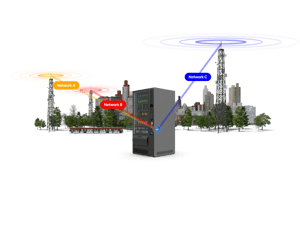
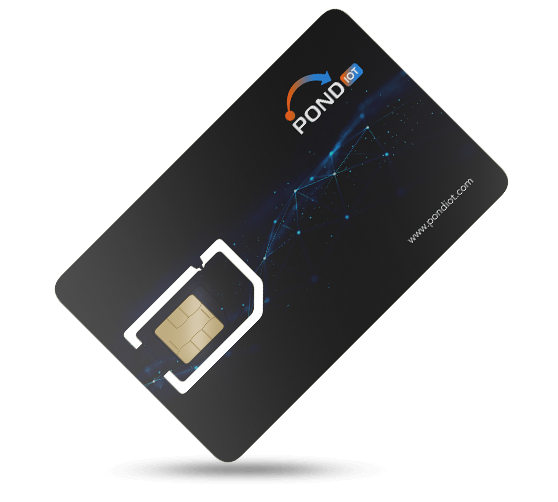
Multi-Carrier SIM Connectivity for Vending Operations
Vending deployments operate across environments where carrier conditions vary by location.
POND IoT’s multi-carrier SIM helps maintain connectivity across unattended machines and distributed deployments.
Built for unattended vending operations:
- Multi-carrier connectivity
- Remote telemetry visibility
- Centralized SIM management
- Rapid deployment setup
- Carrier redundancy for transactions
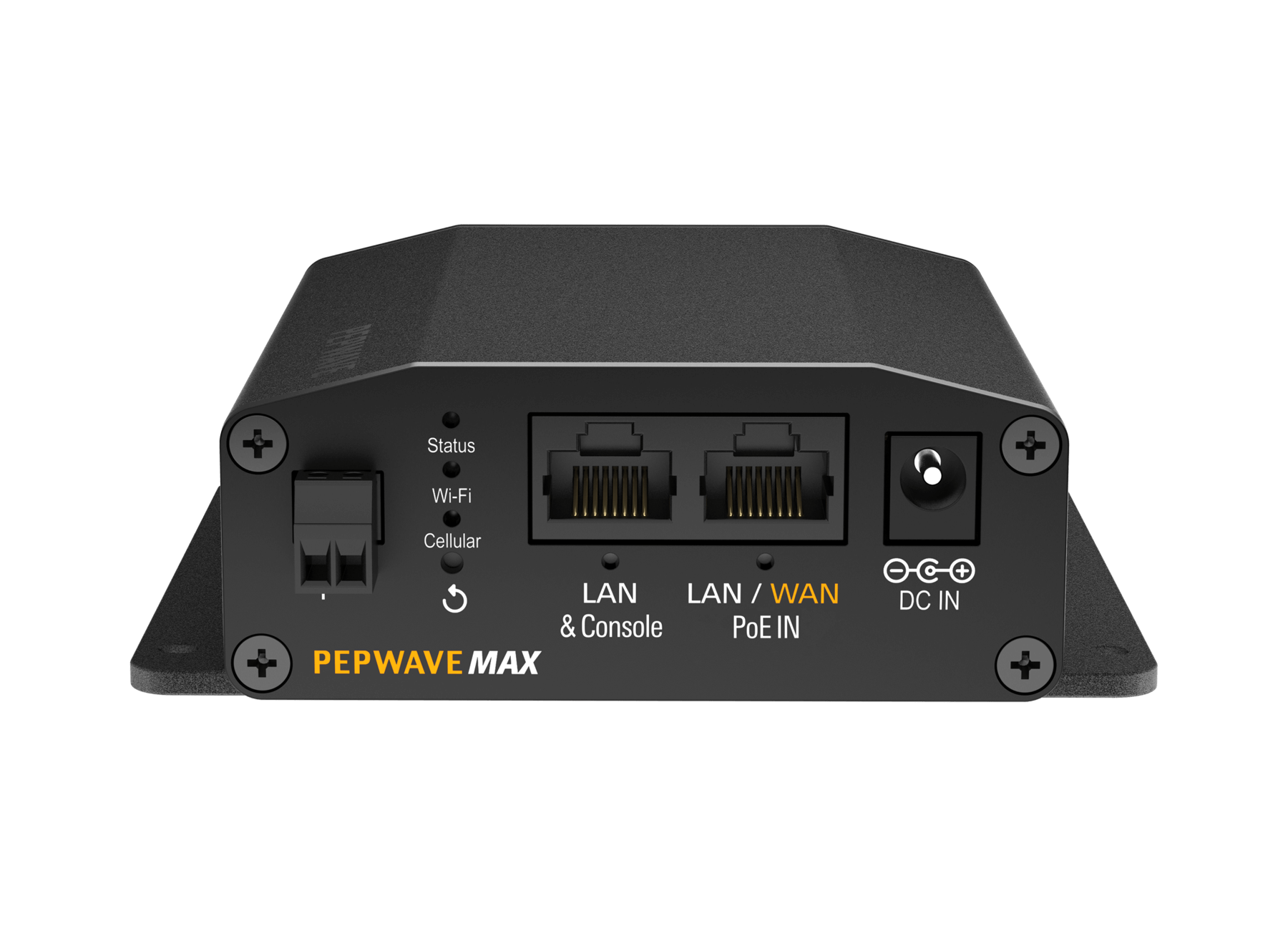
Cellular Internet Backup for Uninterrupted Vending Operations
Built for continuity during outages
- Automatic failover during primary network interruptions
- Continued payments and machine telemetry
- Reduced downtime during network outages
- Carrier redundancy across vending deployments
Multi-Carrier vs Single-Carrier Connectivity for Vending Operations
The SIM architecture used in a vending deployment directly impacts uptime, transaction availability, and operational resilience across locations.
Single-Carrier SIM
- Dependent on one carrier
- Higher outage risk
- Coverage varies by location
- Loss of machine visibility during outages
- Greater operational risk across fleets
Multi-Carrier SIM
- Access to multiple supported carriers
- Maintains transaction continuity
- More consistent connectivity across locations
- Continued telemetry and machine visibility
- Built for distributed vending deployments
Vending Connectivity Plans for Distributed Operations
Choose a connectivity plan designed for unattended vending deployments, whether managing a small machine rollout or a distributed fleet across multiple locations.
| Flex Plan | Lite Plan | Edge Plan | Elite Prime Plan |
|---|---|---|---|
| $22.50/mo | $25/mo | $30/mo | $35/mo |
| Unlimited Data* | Unlimited Data* | Unlimited Data* | Unlimited Data* Static IP Included |
| Includes Teltonika RUT241 | Includes Peplink Max Adapter | Includes Peplink BR1 Core | Includes Peplink BR1 Mini |
| Includes Teltonika's RMS** | Includes InControl 2** | Includes InControl 2** | Includes InControl 2** |
| Upfront Warranty Replacement | Upfront Warranty Replacement | Upfront Warranty Replacement | Upfront Warranty Replacement |
| 3-Year Contract Required | 3-Year Contract Required | 3-Year Contract Required | 3-Year Contract Required |
* Includes 5GB of high-speed data, then throttled to 128 Kbps
** For the duration of the contract
Need a different deployment setup? We’ll tailor a connectivity plan for your vending operation.
Estimate the ROI of Reliable Vending Connectivity
Secure Connectivity for Unattended Vending Operations
- Supports encrypted machine-to-cloud traffic
- Secure routing for payment traffic
-
Optional Static IP for remote access
-
Carrier redundancy during outages
-
Scalable connectivity across fleets
Build the Right Connectivity Setup for Your Vending Deployment
Vending Fleet Visibility and Deployment Scalability
Remote Monitoring
- Maintain visibility into machine status across locations
-
Maintain visibility into connectivity and telemetry
-
Reduce manual troubleshooting and site visits
Scalable Deployment
-
Deploy machines across multiple environments
-
Support distributed unattended deployments
-
Scale from small rollouts to large vending fleets
Vending Machine Connectivity Deployment Checklist
Decide whether cellular will be the machine’s main connection or provide failover when fixed internet is unavailable.
2. Confirm the connection method
Determine whether the vending machine or payment terminal uses an embedded cellular modem or connects through an external cellular router.
3. Verify network compatibility
Confirm that the modem or router supports the required LTE or 5G bands and networks for the deployment locations.
Vending Connectivity Questions and Answers
The best connectivity solution is one that keeps the vending machine reliably online at its deployment location. Depending on the setup, this may be cellular connectivity, a fixed connection with LTE or 5G backup, or multi-carrier connectivity that provides access to multiple supported networks.
Vending machines can connect through an embedded cellular modem with a SIM or eSIM, or through an external cellular router. Cellular connectivity may serve as the primary connection or as backup for Ethernet, Wi-Fi, or another fixed internet connection.
Cashless vending machines typically need reliable connectivity to communicate with payment-processing systems and complete card or mobile transactions. Cellular connectivity is commonly used where fixed internet is unavailable, while cellular failover can provide a backup connection during outages.
With multi-carrier connectivity, the device has access to multiple supported networks and can connect to another available network when needed. For deployments using a primary fixed connection, LTE or 5G failover can provide automatic cellular backup.
Yes. POND IoT connectivity can support vending management platforms, telemetry systems, payment terminals, and remote monitoring applications without requiring vending operators to replace their existing platform.
Yes. Multi-carrier cellular connectivity is designed for distributed vending deployments where coverage and carrier conditions vary by location. SIMs and connectivity can be managed centrally as deployments expand from smaller rollouts to multi-location vending fleets.