


<img src="https://acuteintuitive52.com/810690.png" style="display:none;">
Skip to content
Secure ATM connectivity with multi-carrier SIM and automatic failover

ATM Connectivity
For Business
Continuity

Multi-network cellular connectivity and automatic internet failover designed
for ATM deployments, financial kiosks, and self-service banking environments. 


Why ATM Connectivity Fails

ATM connectivity issues are often caused by carrier outages, weak signal coverage, and single-network dependency.


Connectivity problems most often occur when:
 
  • A single-carrier network experiences an outage or weak signal
  • Wired internet becomes unstable or unavailable
  • ATMs are deployed in remote or low-coverage areas
  • Network congestion affects high-traffic locations
  • Backup connectivity is not in place
 
Even short disruptions can lead to failed transactions, lost revenue, and unnecessary service calls.

How POND IoT Keeps ATMs Online

Multi-carrier cellular connectivity can serve as the primary connection for ATMs, while automatic internet failover provides backup connectivity for deployments that rely on another primary connection. 
Multi-Carrier SIMs for ATMs

Access multiple supported carrier networks through one managed connectivity platform.


5G/LTE over VPN Connection

Transmits ATM data over a secure, encrypted connection to support protected transaction processing. 

Internet Backup for ATMs
Wireless backup connectivity for primary network disruptions.
Plug-and-Play Deployment

SIM cards can be installed and activated quickly, allowing ATMs to be connected with minimal setup. 

How ATM Connectivity Works

ATMs require reliable connectivity to communicate with processing systems and support transaction authorization. Depending on the deployment, this may include banking networks, payment gateways, or blockchain-based processing systems used by crypto ATMs. 

 POND IoT provides Multi-Carrier SIMs for ATMs, giving deployments access to multiple supported cellular networks without requiring fixed-line internet at every location. 

Our solution enables you to:

  • Process transactions without interruption
  • Maintain real-time communication with processing systems
  • Reduce service calls by monitoring SIM connectivity and network performance in real time
  • Keep reporting and settlement on schedule
  • Protect sensitive data with secure connectivity
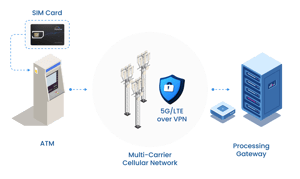
Diagram showing ATM connectivity flow: POND IoT SIM → ATM → Multi-carrier network → 5G/LTE over VPN → Processing gateway.

Why Multi-Carrier Connectivity Is Critical for ATMs

Multi-Carrier SIMs give ATMs access to multiple supported networks, providing alternatives during a carrier disruption. 
 
  • Continuous Connectivity
    Switches automatically between available networks.
  • Reduced Downtime
    Helps prevent ATM downtime during carrier disruptions. 
  • Consistent Coverage
    Supports deployments across varying locations and conditions.
 
POND IoT SIM

Automatic Failover for ATM Connectivity

Connectivity disruptions can interrupt transactions and take ATMs offline. Automatic failover helps maintain uptime during outages.
 
Multi-carrier cellular backup provides access to multiple supported networks instead of relying on a single carrier.

  • Immediate Backup Connectivity
    Switches automatically when the primary connection drops.


  • No Manual Intervention
    Failover occurs without on-site troubleshooting.

  • Reduced Downtime
    Helps maintain ATM availability during outages
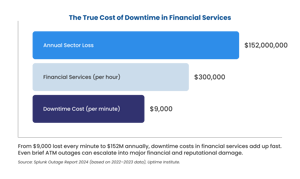


Bar chart showing ATM downtime costs in financial services: $9k per minute, $300k per hour, $152M annually

Multi-Carrier SIM vs Single-Carrier SIM for ATMs

 ATM connectivity depends on the SIM used. Single-carrier SIMs rely on one network, while Multi-Carrier SIMs provide access to multiple supported networks when needed.


Single-Carrier SIM

  • Uses a single network for connectivity
  • Higher risk of downtime if the network fails
  • Limited coverage depending on carrier availability
  • Reliability depends on one provider
  • Deployment depends on location and signal conditions

Multi-Carrier SIM

  • Connects across multiple networks
  • Lower downtime risk with automatic network switching
  • Broad coverage across different locations
  • Maintains connectivity across available networks
  • Suitable for deployments in multiple environments

ATM Connectivity Plans

Flexible connectivity plans for ATM deployments, backup connectivity, and distributed financial systems.  


Essential Plan Core Plan Pro Plan
$22.50/mo $20/mo $25/mo
Unlimited Data* Unlimited Data* Unlimited Data*
Static IP Included
Includes Teltonika RUT241 Includes Peplink Max Adapter Includes Peplink BR1 Core
Includes Teltonika's RMS** Includes InControl 2** Includes InControl 2**
Upfront Warranty Replacement Upfront Warranty Replacement Upfront Warranty Replacement
3-Year Contract Required 3-Year Contract Required 3-Year Contract Required

* Includes 3GB of high-speed data, then throttled to 128 Kbps 

** For the duration of the contract


 Need a different setup? We’ll tailor a plan to your ATM deployment. 

Estimate Your ATM Connectivity Savings

See how much you can reduce downtime costs and improve ATM uptime with reliable SIM-based connectivity.

Secure Connectivity for ATM Transactions

ATMs rely on secure connectivity to process transactions and protect sensitive data. POND IoT supports this with SIM-based connectivity, controlled network access, and support for encrypted communications. . 

Encrypted Data Transmission

  • VPN-Secured Traffic
    Data is transmitted through encrypted connections to help protect against interception.
  • Secure Transaction Communications
    Supports secure transport of cardholder and transaction data within protected payment environments.

Static IP Support

  • Consistent Addressing
    Each ATM can be assigned a fixed IP address for easier identification and monitoring.
  • Secure Remote Access
    Enables secure direct access without complex workarounds. 
  • System Compatibility
    Supports integration with VPN, firewall, and controlled network architectures.

Connectivity for Compliance-Sensitive ATM Environments

Reliable ATM connectivity supports secure communications, compliance reporting, and operational visibility across distributed deployments.

ATM Requirements
  • PCI DSS Environments
    Supports secure network connectivity for ATM systems operating under PCI DSS requirements. 

  • Real-time Reporting
    Provides reliable connectivity for transmitting transaction and security data to monitoring and reporting systems. 
  • Controlled Network Access
    Supports managed connectivity and controlled remote access across distributed ATM deployments. 
Bitcoin ATM Requirements
  • KYC and AML Workflows 
    Provides connectivity for identity-verification, transaction-monitoring, and reporting systems used in regulated Bitcoin ATM operations.
  • Real-time Reporting
    Supports transmission of transaction data to audit and compliance systems. 
  • Controlled Connectivity
    Supports reliable network access across distributed Bitcoin ATM deployments. 

Get the Right ATM Connectivity Setup for Your Deployment

ATM Connectivity Management and Scalability

Remote Monitoring 

Monitor ATM performance and SIM status in real time without on-site visits. 

  • Track SIM connectivity and network status 

  •  Detect connectivity issues early 

  • Reduce service calls 

Scalable Deployment 

Expand your ATM network across locations without relying
on fixed infrastructure.

  • Deploy ATMs in new locations quickly

  • Support both urban and remote sites

  • Scale from single machines to large networks 

Frequently Asked Questions

What SIM card is used in ATM machines?

ATMs with cellular connectivity use SIM cards that provide access to mobile networks for transaction and operational communications. Multi-Carrier SIMs can give ATM deployments access to multiple supported networks instead of relying on a single carrier. 

What is the best SIM for ATM machines?

The best SIM is one that provides reliable connectivity at the ATM’s deployment location. Multi-Carrier SIMs are often used for distributed ATM fleets because they provide access to multiple supported networks and reduce dependence on a single carrier. 

Do ATMs use cellular connectivity?

Yes. Cellular connectivity can serve as the primary connection for standalone or off-site ATMs, or as backup connectivity for ATMs that normally rely on wired internet. 

What happens if an ATM loses connection?

If an ATM loses connectivity, it may be unable to communicate with the processor or banking network required for transaction authorization. Transactions can be interrupted or unavailable until connectivity is restored or a backup connection takes over.

Do ATMs need internet?

ATMs need reliable network connectivity to communicate with banking or payment-processing systems. Depending on the deployment, that connection may use wired internet, cellular connectivity, or a combination of primary and backup connections. 

Do ATMs need a static IP address?

Not always. A Static IP may be required where an ATM deployment needs predictable addressing, controlled remote access, or specific VPN and firewall rules. In other deployments, dynamic addressing may be sufficient. 

Ready to Improve Your ATM Connectivity?

Tell us about your ATM deployment, and we’ll help you choose the right connectivity setup based on your locations, network requirements, and uptime needs.