

<img src="https://acuteintuitive52.com/810690.png" style="display:none;">
Skip to content
Futuristic cityscape with glowing skyscrapers, network lines, and dynamic light trails.

IoT/M2M Connectivity

Keep your devices connected and performing reliably across domestic and global deployments. POND IoT’s Multi-Carrier SIM and Network as a Service (NaaS) offer flexible, scalable connectivity built for your business needs.

At POND IoT, we make it easy for devices to work together.

Whether you’re running a global business or a local project, our solutions help your devices stay connected and share information. This is what Internet of Things (IoT) and Machine-to-Machine (M2M) connectivity means—getting devices to communicate and work efficiently.

With our Multi-Carrier SIM and Network as a Service (NaaS), we offer solutions tailored to your business.

Connectivity Built For IoT

End-to-End Solution
We manage everything from setup to operation, so you can focus on your business—not the tech.
Reliable Data Access
Your devices stay connected, and your data is accessible—even in remote or high-demand environments.
Simplified Billing
Transparent, flexible plans that scale with your usage—no hidden fees, no complexity.
Easy SIM Management
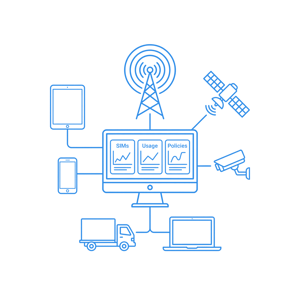
Monitor and control your SIMs anytime with simple, intuitive tools.
Wide Network Compatibility
Connect to 2G, 3G, 4G LTE, LTE-M, and 5G for global coverage and future-ready performance.
Affordable Global Pricing
Connect devices worldwide with competitive rates designed for high-scale IoT deployments.
Custom Branding Options
Customize SIM cards and platforms to reflect your company’s brand and user experience.
Secure Private Networks
Protect your operations with dedicated, encrypted IoT networks built for reliability.

POND IoT's Advantages

With POND IoT, staying connected worldwide has never been easier. Our solutions deliver:

  • Global Coverage: SMART SIMs operate in 200+ countries, ensuring global IoT connectivity wherever you do business.
  • Custom Data Routing: Control how your data is routed to optimize network efficiency and maintain secure communication.
  • Easy Integration: Our APIs work seamlessly with your systems, enabling fast setup and smooth deployment.
  • Faster Performance: Direct-to-network access eliminates third-party delays, ensuring low-latency IoT performance.
  • Reliable Infrastructure: Backup systems across multiple locations ensure your connection stays strong, even during disruptions.
  • Simplified Management: Track usage, monitor SIMs, and manage billing with intuitive tools that streamline operations.
Digital globe with connected IoT devices
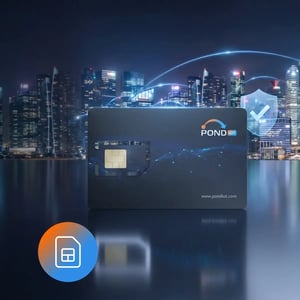
POND IoT SIM card

The Best IoT SIM

Stay connected with confidence using our Multi-Carrier IoT SIM, built for global performance and seamless network switching.

  • No Downtime: Automatically switches to the strongest available network for uninterrupted service.
  • Flexible Terms: No minimum contract; scale your IoT deployment at your pace.
  • Future-Proof: Built for long-term use with support for emerging technologies.
  • Wide Compatibility: Works with 2G, 3G, 4G, LTE-M, NB-IoT, and 5G devices.
  • Global Reach: Connect through 800+ networks across 200+ countries.


Looking for a smarter setup? Explore our eSIM options for instant activation and global reach.

Network as a Service (NaaS)

Network as a Service (NaaS) lets businesses rent or subscribe to flexible networking infrastructure instead of building and maintaining it themselves. It’s a scalable, cost-effective way to deploy and manage networks—without the complexity of owning physical infrastructure.

POND IoT’s NaaS solution delivers powerful features designed for secure, scalable network deployment:

  • Private LTE Networks: Deploy a secure, private network with a customizable portal.
  • Custom Coverage: Tailored connectivity designed around your business and device requirements.
  • Full Control: Set access rules, manage devices, and prioritize traffic across your network.
  • Improved Security: Reduce cyber risks with encrypted, enterprise-grade network protection.
  • Hassle-Free Maintenance: We handle upgrades, patching, and performance optimization for you.
Laptop with a glowing shield icon and padlock, symbolizing cybersecurity and data protection

Need Tailored Solutions?

Brochure cover for POND IoT featuring Multi-IMSI Connectivity for Cellular IoT

Multi-IMSI Connectivity for Cellular IoT

Cellular IoT connectivity is evolving rapidly—and businesses need more flexible, resilient ways to keep their devices online. Traditional single-network SIMs no longer meet the demands of global IoT deployments. Discover how Multi-IMSI SIM technology offers a smarter, scalable solution for today's connected world.

Multi-Network Connectivity

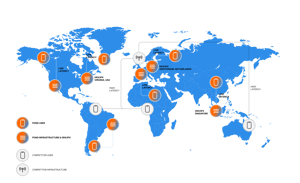
World map showing low and high latency connectivity across global GRX/IPX points, highlighting POND infrastructure and users
Cell tower with interconnected signals representing wireless communication

Reliable Network Management

Keep your IoT and M2M devices connected and operating efficiently with robust solutions built for network reliability, flexibility, and global coverage:

  • Global APNs for Stability: Maintain stable connectivity with global APNs and redundant infrastructure that reroutes data automatically during outages.
  • Multi-IMSI Profiles: Access over 26 IMSI profiles to connect with local networks worldwide. Instantly switch profiles to restore connectivity during service interruptions.
  • Two-Way SMS Support: Send and receive global SMS alerts using SMPP Bind and dedicated device numbers.
  • eSIM Flexibility: Easily deploy and manage IoT devices with remote provisioning and eSIM support.
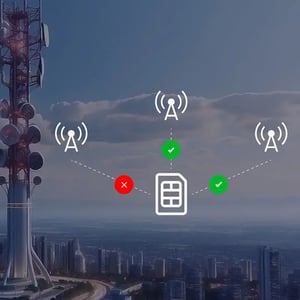
  • POND Multi-Carrier SIM (SMART SIM): Automatically connects to the strongest available network—no manual SIM swaps needed.

World-Class Support & Management Services

Experience exceptional service and personalized support to keep your IoT operations running smoothly—anywhere in the world.

  • 24/7 Global Support: Our multilingual call centers operate in 5 languages, with Tier 3 specialists resolving 98.7% of issues on the first call. We guarantee follow-up for anything unresolved.
  • Dedicated Account Managers: Get tailored support for your IoT and M2M deployments—from billing to tech troubleshooting.
  • Access to Leadership: Reach our executive team directly for escalations, strategic input, or custom solution design.
  • Simplified Billing: Transparent billing with detailed breakdowns and quarterly usage reviews to help reduce costs.
  • Local Offices Worldwide: On-the-ground support in key regions, including the US, UK, Germany, Dubai, and Ukraine.
Three men wearing headphones working on laptops

Key Information You Want to Know about M2M Connectivity

What is M2M Communication?

Machine-to-Machine (M2M) communication allows devices to share data and perform tasks without human input. It’s a core component of IoT (Internet of Things), enabling connected devices to communicate in real time, make decisions, and improve efficiency across industries.


Key Features of M2M Communication:

  • Autonomy: Devices act independently and respond to inputs automatically.
  • Connectivity: Communication occurs via cellular, Wi-Fi, Bluetooth, or other networks.
  • Real-Time Data Sharing: Devices exchange information instantly to support automated workflows.

M2M is vital for sectors like healthcare, manufacturing, and smart cities, powering everything from thermostats to industrial automation systems.

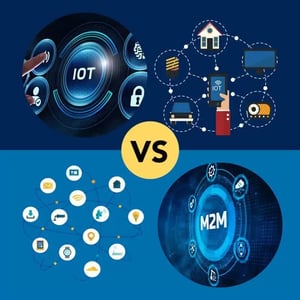
What is the Difference Between M2M and IoT ?

What is M2M (Machine-to-Machine) Communication?
M2M allows devices to exchange data directly without needing human involvement. It’s commonly used in industries like manufacturing and logistics where machines need to perform tasks in predictable, repetitive environments.


What is IoT (Internet of Things)?
IoT expands on M2M by creating a network of devices that communicate via the internet. These devices gather, analyze, and share data—often using cloud computing and AI—to make decisions without human intervention. IoT supports dynamic environments like smart homes, smart cities, and connected healthcare.


Key Differences Between M2M and IoT:

  • Connections: M2M enables direct device-to-device (one-to-one) communication; IoT links many devices (many-to-many) across platforms and locations.
  • Technology: IoT uses the cloud, analytics, and APIs; M2M uses dedicated hardware and local networks.
  • Application: M2M is ideal for specific tasks in stable environments (like factories). IoT adapts to complex, changing settings (like hospitals or smart cities).
Connectivity Options for M2M Technology

There are several ways to connect M2M devices, each suited for different environments. Options include cellular, Wi-Fi, Bluetooth, Zigbee, and LoRaWAN.


Cellular Networks – Best for wide-area coverage and reliability. Offers secure, scalable connectivity, even in remote areas.

Downside: Data costs can be high, especially for large-scale or high-volume deployments.


Wi-Fi – Affordable and fast for short-range or indoor M2M applications like smart homes or retail setups.

Downside: Limited range and not ideal for outdoor or long-distance communication.


Bluetooth & Zigbee – Ideal for low-power, short-range communication in smart buildings or industrial monitoring.

Downside: Not suitable for large or geographically distributed networks.


LoRaWAN – Perfect for large-scale deployments (e.g., smart cities, agriculture) where long-range communication is needed with minimal power use.

Downside: Lower data speeds and higher setup costs compared to other options.


Choosing the right connectivity method depends on range, data volume, power consumption, and cost-efficiency.

What Communication Protocol is Used in M2M Connections?

M2M connections allow devices to share data automatically, forming a critical layer of IoT systems. To ensure reliable, low-power, and long-term communication, M2M devices rely on specific lightweight protocols that minimize energy use and support independent operation.


Key Protocols in M2M Connectivity:

  • MQTT (Message Queuing Telemetry Transport):
    A lightweight messaging protocol designed for devices with limited processing power or bandwidth. It’s reliable even on unstable networks, making it ideal for remote or mobile applications.

  • OMA LWM2M (Open Mobile Alliance Lightweight M2M):
    Created for managing large fleets of IoT and M2M devices, especially battery-powered units. It supports remote device management and firmware updates.

  • CoAP (Constrained Application Protocol):
    Enables small, low-power devices to exchange data using standard web technologies like HTTP. It’s optimized for efficiency and simplicity in constrained environments.


These M2M communication protocols are critical for enabling devices to function autonomously and efficiently—especially when operating under limited power and network conditions.

How Do M2M Connections Work?

Machine-to-Machine connections work by using sensors, networks, and software to collect data and trigger automated responses—without human involvement. These connections rely on public or private networks (such as cellular or Ethernet) to deliver real-time data where it’s needed.


Key Components of M2M Systems:

  • Sensors:
    Sensors collect information like temperature, light, or pressure. For example, an ATM sensor can detect when cash is running low and trigger a refill request.

  • Communication Links:
    These are the connections (like Wi-Fi, cellular, or RFID) that transfer data from the sensors to a central system.

  • Computing Software:
    The system’s software processes the data and acts automatically based on set rules. For example, it might send an alert, adjust a setting, or start a process—no human input needed.

Ready to Connect Your IoT Devices?

Just fill out the form, and our team will help you find the perfect IoT solution tailored to your needs.