

IoT/M2M Connectivity
POND IoT supports domestic and global deployments with Multi-IMSI SIM connectivity and managed networking, designed to keep devices reachable and stable over the long term.
At POND IoT, we make it easy for devices to work together.
Whether you’re running a global business or a local project, our solutions help your devices stay connected and share information. This is what Internet of Things (IoT) and Machine-to-Machine (M2M) connectivity means—getting devices to communicate and work efficiently.
With our Multi-Carrier SIM and Network as a Service (NaaS), we offer solutions tailored to your business.
Connectivity Built For IoT
POND IoT's Advantages
Built to keep deployments stable and manageable as they grow.
-
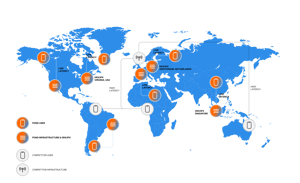
Global coverage - SMART SIMs work across 200+ countries while keeping connectivity behavior consistent.
-
Custom data routing - Control how traffic is routed instead of relying on default public paths.
-
Easy integration - APIs and tools fit into existing systems without heavy setup or rework.
-
Direct network access - Fewer intermediaries help reduce latency and improve stability.
-
Resilient infrastructure - Redundant systems support continuity during outages or disruptions.
-
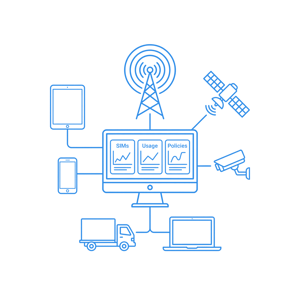
Centralized management - Monitor SIMs, usage, and billing from one place as deployments scale.


IoT SIM for Stable Device Connectivity
Designed for deployments where connectivity issues quickly turn into operational problems, our Multi-IMSI IoT SIM helps devices stay reachable across networks and regions without manual intervention.
-
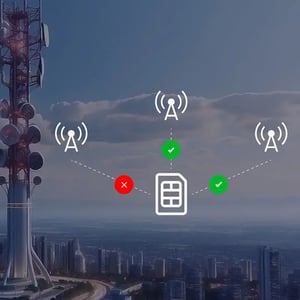
Automatic network switching - Devices can switch across networks automatically to reduce connectivity disruptions.
-
Built for scale - Deploy without minimum contract commitments and expand deployments as device counts grow.
-
Long-term compatibility - Supports current and emerging mobile technologies to avoid early hardware or SIM replacement.
-
Broad device support - Works across 2G, 3G, 4G LTE, LTE-M, NB-IoT, and 5G environments.
-
Global reach - Access 900+ mobile networks across more than 200 countries.
For deployments using devices with embedded SIMs, the same connectivity is available via eSIM.
Network as a Service (NaaS)
Network as a Service is a managed way to control how devices connect and communicate, without having to build or operate the network yourself.
As IoT deployments grow, some use cases need more than basic connectivity. NaaS is used when teams want predictable network behavior, tighter control over traffic, and fewer operational tasks to manage internally.
POND IoT manages how connectivity is handled so devices follow the same rules across locations and networks.
This is used when teams need to:
-
Managed network environments - Device traffic stays within defined network paths instead of going straight over the public internet.
-
Custom routing and access control - Control how data is routed, who can access it, and how devices are handled on the network.
-
Centralized network control - Manage connectivity rules, devices, and policies from a single platform.
-
Enhanced security - Keep traffic within managed infrastructure using encryption and controlled routing policies.
-
Managed operations - Network configuration, updates, and ongoing optimization are handled centrally.

Need Tailored Solutions?
Multi-Network Connectivity


Reliable Network Management
Reliable network management keeps devices reachable and traffic predictable as conditions change.
-
Global APNs - Use global APNs with redundant infrastructure to maintain consistent routing during network disruptions.
-
Multi-IMSI profiles - Devices can use multiple IMSI profiles to connect with local networks and switch profiles when connectivity issues occur.
-
eSIM support - Deploy and manage devices remotely using eSIM where embedded SIM hardware is required.
-
POND Multi-IMSI SIM (SMART SIM) - Provides multi-network connectivity without manual SIM replacement, supporting long-term deployments.
World-Class Support & Management Services
Reliable connectivity also depends on how issues are handled once devices are live. Support and management services are designed to keep operations running smoothly as deployments grow and change.
-
24/7 global support - Multilingual support teams operate in five languages, with Tier 3 specialists resolving 98.7% of issues on the first call. Follow-up is provided for anything that remains open.
-
Dedicated account management - Each deployment is supported by an account manager who helps with billing questions, operational changes, and technical coordination.
-
Direct access to leadership -Escalations, strategic discussions, and custom solution design can be addressed directly with senior leadership when needed.
-
Simplified billing - Clear billing with detailed usage breakdowns and regular reviews helps teams track costs and plan ahead.
-
Local presence - On-the-ground support is available in key regions, including the US, UK, Germany, Dubai, and Ukraine.

-1.png)
Multi-IMSI Connectivity for Cellular IoT
Cellular IoT connectivity is evolving rapidly—and businesses need more flexible, resilient ways to keep their devices online. Traditional single-network SIMs no longer meet the demands of global IoT deployments. Discover how Multi-IMSI SIM technology offers a smarter, scalable solution for today's connected world.
Key Information You Want to Know about M2M Connectivity
M2M communication is what makes machines operate without someone constantly checking on them. A device sends data, another system receives it, and something happens automatically. No dashboard, no manual step in between.
You see this in places where things are expected to just run. Equipment reporting its status, sensors sending measurements, or systems triggering alerts when something changes. The whole point of M2M is that nobody needs to sit there watching it work.
In real projects, M2M usually comes first.
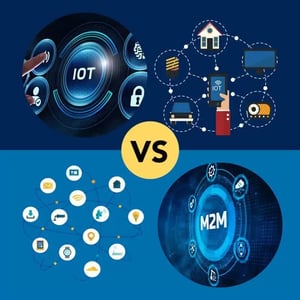
M2M handles a specific task. A machine sends data, a system reacts. It’s direct and predictable. IoT builds on top of that by connecting many devices into a wider setup where data is stored, analyzed, and shared across systems.
So while M2M is about machines talking, IoT is about what you do with that information once it starts coming in from many places.
There isn’t a single answer here because M2M devices live in very different environments. Some are installed in places where cellular coverage is the only option. Others sit inside buildings with Wi-Fi. Some need to save power and send very little data.
What matters most is not the technology itself, but whether the connection stays reliable without constant attention.
Cellular connectivity is common because it works almost everywhere and doesn’t rely on local infrastructure. Wi-Fi is often used when devices stay in one place and the network is controlled. Bluetooth and Zigbee are chosen for short distances and low power use. LoRaWAN comes into play when devices need to send small amounts of data over long distances.
Most deployments end up choosing what works in practice, not what looks best on paper.
M2M devices don’t use heavy protocols because they don’t need them. They send small messages, often over unreliable networks, and they need to keep running for long periods.
Protocols like MQTT are popular because they tolerate unstable connections. Others are used when managing large numbers of devices remotely or when bandwidth and power are limited. The goal is always the same: keep communication simple and dependable.
In practice, data is collected quietly in the background. A sensor reports something. A system notices it. An action is triggered automatically.
Sometimes that action is an alert. Sometimes it’s an adjustment. Sometimes it’s just logging information for later. The value of M2M is that all of this happens without human involvement, which is exactly why it’s used in the first place.
Frequently Asked Questions About IoT Connectivity
This usually shows up after a pilot phase. A handful of devices connect, everything looks fine, and then things start breaking once the numbers grow. Routing becomes inconsistent, IP addresses change, and suddenly devices are harder to reach or manage.
At small scale, these problems stay hidden. At larger scale, they don’t. That’s when network-level decisions start to matter much more than they did in testing.
A VPN works well for people. It was never designed to organize how hundreds or thousands of devices behave inside a mobile network.
For IoT devices, the problem is not encryption alone. It’s reachability, stability, and predictability. A VPN can protect traffic, but it does not control how devices are routed or how the carrier treats their connections. That’s why many deployments outgrow VPN-only setups.
Cellular networks are not built for direct access by default. Devices are often placed behind shared addressing or carrier-grade NAT, which makes inbound connections unreliable or impossible.
Without a predictable network path, devices may appear online but still be unreachable. This is one of the first surprises teams run into when they move from local networks to cellular deployments.
Consumer mobile plans are optimized for phones. They assume someone is using an app, browsing the web, or streaming content. Devices can move, reconnect, and change IPs without much consequence.
IoT connectivity has very different expectations. Devices are expected to stay online, behave consistently, and be managed remotely. That requires more control at the network level than consumer connectivity typically provides.
What works in one place does not always behave the same way somewhere else. Different carriers handle routing, addressing, and internal network rules in their own way.
When devices move across regions or networks, those differences surface quickly. Without a consistent connectivity layer, the same device can behave perfectly in one location and unpredictably in another.
In real deployments, choices are usually driven by constraints. Coverage, power consumption, and reliability come first. Cellular is often used because it works almost everywhere. Other technologies come into play when devices need to save power or send very small amounts of data.
Many deployments end up mixing technologies rather than relying on a single one.
This becomes important the moment remote access or centralized management is needed. Dynamic IPs can change without warning, which makes it harder to reach devices consistently.
Static or fixed IP addressing removes that uncertainty. It’s not about performance, but about knowing where your devices are on the network when you need to reach them.
Related Resources