

Multi-IMSI SIMs store more than one subscriber identity and allow devices to connect through different mobile networks. They are used in IoT deployments where connectivity needs to adapt across regions. This guide explains how Multi-IMSI SIMs work and why they are used.
The way SIM cards are handled by mobile networks affects how devices connect in practice. When devices are deployed across different countries or regions, a single network identity can become a practical limitation rather than a benefit.
Multi-IMSI SIMs are used in situations where devices need access to more than one mobile network. Instead of relying on a single operator, connectivity can shift between available networks as coverage conditions change. This approach is commonly used in deployments that operate beyond one market or geographic area.
The sections below describe the main advantages of Multi-IMSI SIMs and how they are applied in everyday connectivity scenarios involving mobile and IoT devices.
Table of Content:
- A Brief History of the SIM Card
- What is a Multi-IMSI SIM and How Does It Work?
- Seamless Scalability for Global IoT
- Case Study: Global Logistics Firm Enhances Reliability
- Latency in Multi-IMSI Deployments
- Roam Steering with Multi-IMSI
- Benefits of a Multi-IMSI Solution
- Exploring Where Multi-IMSI Is Used
- FAQ about Multi-IMSI SIMs
A Brief History of the SIM Card
Before Multi-IMSI SIMs existed, SIM cards were built for a very different world.
When SIM cards first appeared in the early 1990s, their role was simple. It stored one subscriber identity and linked a phone to one mobile network. At the time, this made perfect sense. Most people used their phones in one country, usually with one operator, and rarely moved between networks.
Over time, phones became smaller and more compact, and SIM cards had to adapt. The original card size was reduced step by step, first to mini and later to nano SIMs, simply to fit new device designs. Despite these physical changes, the SIM itself did not really change. It still carried a single network identity and remained tied to one mobile operator. One SIM still meant one network identity.
Problems started to appear when connected devices moved beyond personal phone use. Businesses began deploying devices that were not tied to a single location. Equipment crossed borders, vehicles moved between regions, and devices were expected to stay online without manual support. In these situations, a single network identity became a limitation rather than a benefit.
Managing connectivity through roaming agreements worked in some cases, but it was not always reliable. Devices could stay connected to a network that was available but no longer performed well. In other cases, connectivity dropped completely until manual action was taken.
Multi-IMSI SIMs were created in response to these challenges. Instead of relying on one network identity, they store several identities on the same card. With more than one network identity stored on the SIM, a device is no longer locked to a single operator. If coverage changes or a network stops working well, this card can use another available identity and reconnect. Nothing needs to be swapped or adjusted on the device itself.
This approach fits deployments where equipment is spread across many locations or moves between them. Instead of planning connectivity around one network, devices are able to keep working as conditions change.
What is a Multi-IMSI SIM and How Does It Work?
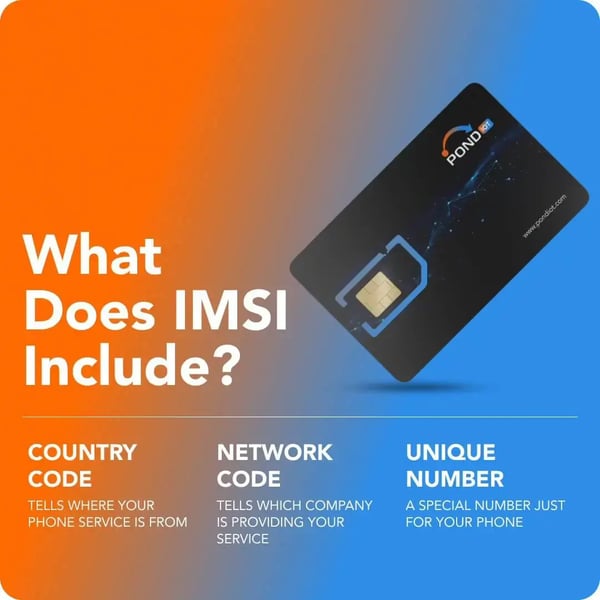
A Multi-IMSI SIM includes more than one IMSI on a single card. Each IMSI is a 15-digit number used by mobile networks to recognise a subscriber, with parts that indicate the country, the network, and the individual subscriber, as shown below on the image.
All available IMSIs sit on the SIM itself. During a connection attempt, the SIM uses one of them to access a mobile network. The identity chosen at that point defines which operator the device connects through.
A traditional Single-IMSI SIM contains only one subscriber identity and is linked to a single mobile network. Multi-IMSI SIMs extend this model by making several network identities available on the same SIM, allowing devices to connect through different operators without replacing hardware.
This becomes relevant when devices move between regions or operate in areas with changing coverage. If a connection cannot be established or drops during use, the SIM can attempt to connect again using another IMSI stored on the card. In practice, the SIM takes care of the switch, and the device continues its work.
Seamless Scalability for Global IoT
Scaling an IoT deployment usually does not fail because of the devices themselves. It fails because connectivity becomes harder to manage as deployments spread across borders.
When equipment is installed in more than one country, teams often end up dealing with different mobile operators, different SIM setups, and different rules for each location. What starts as a small rollout can quickly turn into a mix of configurations that are difficult to track and maintain.
Multi-IMSI SIMs help avoid this situation. With these SIMs, teams do not have to think about which SIM goes into which device. The same SIM can be installed everywhere. When a device is switched on, it connects to a local mobile network on its own. There is no need to replace the SIM or make changes later if the device ends up in a different country.
This approach is particularly useful in environments where equipment is rolled out in phases or expanded over time. In energy deployments, for example, monitoring devices may be added country by country as infrastructure grows. Using the same SIM setup across locations makes planning and installation more predictable.
The same applies to healthcare devices that are not fixed to one place. Monitoring equipment may be moved, reassigned, or used by people who travel. When connectivity adapts on its own, devices are less likely to drop offline simply because their location has changed.
In these situations, scalability is not only about reaching more places. As deployments expand, the goal is to avoid creating extra work for the teams running them. When connectivity does not need to be redesigned for every new location, it becomes easier to keep systems stable over time.
Case Study: Global Logistics Firm Enhances Reliability
A logistics company operating across North America started noticing gaps in its tracking data. Containers were equipped with tracking devices, but once shipments crossed borders between the United States, Canada, and Mexico, connections were often lost. In some cases, devices stayed offline for hours. In others, they connected to a network that was technically available but unreliable.
At first, the issue was handled manually. Teams tried to restore connections when problems appeared, but this became harder as the number of tracked assets increased. The setup relied on Single-IMSI SIMs, which meant each device stayed tied to one network identity. When shipments crossed borders, devices either depended on roaming or required SIM replacements to connect to a local network, neither of which scaled well as operations grew.
The company eventually moved to multi-IMSI SIMs across its tracking fleet. After the change, devices were able to reconnect using different network identities as shipments moved between regions. No changes were needed to the hardware, and the devices did not require new configurations once deployed.
Over time, the impact became clear. Tracking data was available consistently across borders, with uptime reaching 99.9%. Connectivity issues became less of a daily problem. Devices stayed online more consistently, and teams no longer had to chase missing data or intervene when shipments crossed borders. The tracking system started behaving the same way in different countries, which made it easier to rely on the data it produced.
Instead of planning routes and operations around the limits of one network, the company could focus on moving goods. The tracking setup stopped being a point of uncertainty and became something the teams could largely stop thinking about.
Latency in Multi-IMSI Deployments
In mobile networks, delays are not always caused by weak signal or lack of coverage. Devices can respond more slowly even when connectivity appears stable, especially during roaming.
In some setups, data ends up being handled far from where the device is actually operating. This can show up as slower responses, even when everything else looks normal.
With Multi-IMSI SIMs, devices are able to connect through different mobile networks. In certain cases, this allows traffic to follow a shorter and more direct path. The result is not guaranteed speed improvements, but behaviour that is easier to predict across locations.
For IoT systems that exchange data regularly, this predictability often matters more than raw performance. Avoiding unnecessary routing complexity helps devices behave more consistently as they move between networks.
Roam Steering with Multi-IMSI
Roam steering refers to how a device chooses which mobile network to use when more than one option is available. In practice, this decision is influenced by how the network responds during a connection attempt rather than by any manual selection.
With Multi-IMSI SIMs, devices have access to more than one network identity. This gives the SIM flexibility when a connection does not succeed on the first attempt. Instead of staying tied to a single network, the SIM can try another available option and continue operating without interruption.
It usually happens when devices move between regions or work in areas with not stable network conditions. The SIM handles the selection process internally, so the device itself does not need to be reconfigured when the network changes.
From an operational point of view, roam steering in Multi-IMSI setups is less about choosing the “best” network and more about avoiding situations where a device remains connected to a network that no longer performs reliably.
Benefits of a Multi-IMSI Solution
- When Multi-IMSI SIMs are used in real deployments, the most noticeable change is how devices behave when network conditions are not ideal. Rather than relying on a single mobile network, devices have more than one option available, which reduces the chance of staying connected to a network that no longer performs well.
- As deployments grow, this approach makes daily operations easier to manage. Using one SIM model across devices helps teams keep track of what is installed and maintain a consistent setup as the deployment expands.
- In practice, Multi-IMSI is less about adding features and more about reducing friction. Fewer manual changes, fewer edge cases, and fewer situations where a device becomes difficult to manage because of where it is deployed.
Exploring Where Multi-IMSI Is Used
Multi-IMSI setups are most often seen in deployments where devices are expected to stay online without hands-on management. This includes environments where equipment moves, coverage changes, or network behaviour cannot be predicted in advance, for example devices installed in vehicles, field equipment, or mobile infrastructure.
In practice, this is common in systems that involve vehicles, mobile teams, or distributed equipment, such as tracking units, payment terminals, or connected signage. As devices move between locations, connectivity conditions change, and having access to more than one mobile network helps avoid situations where a device stays attached to a network that no longer works well.
The same approach is also used in setups where data needs to be exchanged continuously while devices operate in different places, for example monitoring systems or remote control equipment. When network conditions change, devices are less likely to end up offline for long periods.