

Improving Solar Panel Operations with Multi-IMSI SIM and Satellite Connectivity
Background
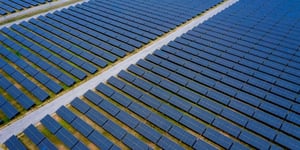
Solar energy systems do not operate in one type of environment. Some are installed in remote open areas as large solar farms. Others are placed on rooftops in cities or across industrial facilities. From the outside, the setup may look similar. In reality, the conditions behind each site are very different.
What stays consistent is the need for visibility. Operators rely on data from each installation to understand how systems are performing. That includes energy production, equipment status, and early signs of faults, all of which depend on stable connectivity for solar panels. In many cases, this data is also used for reporting, whether for internal tracking or to meet external requirements tied to contracts or incentives.
The issue is that connectivity does not behave the same way across all locations. Urban sites can deal with interference or unstable signal conditions. Remote sites may sit at the edge of coverage or lose connection altogether at times. When connectivity drops, even briefly, the flow of data becomes unreliable. Gaps appear. Monitoring becomes less accurate. Teams are left working with partial information.
Multi-IMSI SIM changes how these systems stay connected. Instead of relying on one network, devices can switch between carriers depending on which signal is available. In locations where cellular coverage is still not enough, satellite can be used to maintain the connection. Together, this approach helps keep solar operations visible across different environments.
Key Challenges
1. Coverage is not consistent across locations
Solar installations are spread across areas with very different network conditions. A setup that works well in one region may struggle in another. Relying on a single carrier does not provide the same level of performance everywhere.
2. Monitoring depends on continuous data
Performance tracking is only reliable when data is consistent. If connectivity drops, even for short periods, operators lose visibility into what is happening at the site. Issues can go unnoticed until they begin to affect output.
3. Scaling creates additional complexity
As more installations are added, managing connectivity becomes harder. Different carriers, plans, and coverage conditions across sites make the network more difficult to maintain and expand.
Use Case Scenario
Emma manages a group of solar installations that includes both remote solar farms and rooftop systems in urban areas. Her team needs to keep track of performance across all sites and ensure that systems are running as expected.
Before updating their connectivity setup, many of the installations relied on single-carrier SIMs. In some rural locations, coverage was weak or inconsistent. In cities, signal quality could change depending on the building or surrounding infrastructure. The result was not a complete loss of connectivity, but something more difficult to manage. Some sites worked reliably. Others dropped data at certain times or under certain conditions.
That inconsistency created problems. Monitoring data was not always complete. Alerts were sometimes delayed. The team spent time trying to determine whether issues were caused by the equipment or the network itself.
Impact of Traditional Connectivity
With single-carrier SIMs, the network behaved differently from one site to another. Some installations stayed online without issues. Others experienced regular interruptions. There was no simple way to standardize performance across the portfolio.
This also affected day-to-day operations. When data stopped coming through, the team had limited visibility into system performance. In some cases, they had to wait until the connection returned. In others, they needed to send someone on-site just to understand what was happening.
Managing multiple carriers across different locations added another layer of complexity. Each new installation required its own setup decisions. What worked in one area could not always be reused in another.
Overall, the problem was not a complete lack of connectivity. It was inconsistency, and the operational friction that came with it.
Implementation of the Solution
Emma’s team moved to a setup based on Multi-IMSI SIMs, with satellite used for locations where cellular coverage alone was not enough. This allowed each site to connect using the strongest available option rather than depending on a single network.
In urban environments, devices could switch between carriers when signal conditions changed. In remote areas, satellite ensured that installations stayed connected even when terrestrial coverage was limited. The team also gained the ability to manage connectivity remotely, which simplified deployment and ongoing support.
The infrastructure at the solar sites remained the same. What changed was the reliability of the connection behind it.
Operational Benefits
-
Connectivity became more stable across the network, and that changed how the team worked day to day. Data started coming in without the same gaps as before, which made it easier to understand what was actually happening at each site.
-
The setup also became less fragmented. Instead of managing different carrier arrangements depending on location, the team could approach connectivity in a more consistent way. Adding new installations no longer required the same level of adjustment each time.
-
Troubleshooting shifted as well. When something looked off, there was usually enough data available to investigate without guessing. In many cases, issues could be reviewed remotely before deciding whether a site visit was needed.
-
The overall workload did not disappear, but it became more predictable. Fewer interruptions, fewer unknowns, and less time spent chasing connectivity-related problems across different locations.
Outcome
By moving to Multi-IMSI SIMs with satellite support where needed, Emma’s team reduced the variability in connectivity across their solar network. Sites stayed online more consistently, data gaps were reduced, and monitoring became more dependable.
For solar operators, the impact is practical. Better connectivity supports better visibility, which leads to faster response times, smoother operations, and a more stable foundation for managing distributed energy systems.