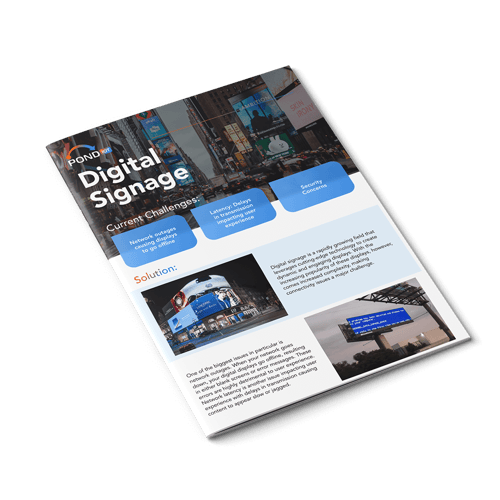


Improving Digital Signage Connectivity
with Multi-Carrier SIM
Background
Digital signage has become a common way for businesses to communicate with customers in public spaces. Retail stores, transportation hubs, restaurants, and outdoor advertising networks use digital displays to deliver advertisements, announcements, and real-time information.
Behind every digital screen is a connection that links the display to a central management platform. Through this connection, operators upload new campaigns, update content schedules, and monitor whether each screen is working properly.
When that connection is interrupted, the impact becomes visible immediately. A display may stop updating, show outdated content, or go completely blank. For companies managing large digital signage networks, maintaining reliable connectivity across many locations is therefore essential.
In many digital signage deployments, cellular connectivity becomes the preferred option because it allows displays to be installed almost anywhere. Screens can be placed in shopping centers, transit areas, or outdoor locations without depending on existing wired internet or local Wi-Fi networks.
Key Challenges in Digital Signage Connectivity
As digital signage networks grow, operators start noticing a few recurring connectivity issues. These problems usually appear when displays are spread across many locations with different signal conditions.
-
Network Outages
When a display loses its connection to the network, it also loses access to the content management platform that controls it. In those moments the screen may go blank, show an error message, or remain stuck on outdated content.
For companies running advertising campaigns or delivering public messaging, even a short outage can affect how the content is seen by viewers.
-
Latency
Another issue appears when network latency increases. Digital signage displays frequently download large media files such as videos or high-resolution graphics. If the connection slows down, content updates can arrive late and animations may appear uneven or delayed.
Even when the screen stays online, slower connections can still cause problems. Media files may take longer to load and transitions between videos or images may not appear as smooth as intended. Viewers usually notice these small delays right away.
-
Security Risks
Digital signage networks also have to deal with security concerns. Every display communicates with the platform that controls content and updates. If that connection is not properly protected, unauthorized access could disrupt the network or alter the content shown on the screens.
Use Case Scenario: Managing a Digital Signage Network
One media company operates a large network of digital advertising screens across a major city. The displays appear in shopping centers, transit areas, and several outdoor locations where foot traffic is high.
All of these screens are managed from a single control platform that distributes content and monitors the status of each display. From there the team schedules advertising campaigns, uploads new content, and checks whether each display is working properly.
At the beginning the displays relied on cellular connectivity from a single mobile network provider. For many locations this setup worked without difficulty. In some areas, however, the connection proved less stable.
From time to time a display would lose communication with the content platform. When that happened, the screen might stop receiving updates or continue showing the same advertisement longer than planned.
After investigating several of these incidents, the operations team concluded that the displays themselves were not the issue. Most interruptions were related to inconsistent mobile signal conditions.
Impact of Traditional Connectivity
As more screens were installed, these connectivity limitations became easier to notice.
-
Single-Network Dependence
Because each display relied on only one mobile network, connectivity quality depended entirely on the signal available at that location.
-
Content Update Delays
Some displays were installed in locations where the mobile signal was weaker than expected. In those cases, downloading new media files could take longer, especially when campaigns included large video or image files. As a result, a few screens occasionally updated later than others.
-
Security Considerations
Digital signage networks rely on constant communication between the displays and the platform that manages content. Because of this, operators also have to consider how that connection is protected. Preventing unauthorized access to the display network becomes an important part of day-to-day operations.
Implementation of Multi-Carrier SIM
To improve reliability, the company introduced Multi-Carrier SIM connectivity for its display devices.
Instead of depending on one mobile operator, the SIM allows the device to access several networks. The display can then connect to whichever network provides the strongest signal at the time.
If coverage conditions change or a network becomes unstable, the device simply switches to another available connection. This helps maintain a steady link between each display and the content management platform.
This approach creates a more stable communication link between each digital screen and the central content platform.
Operational Benefits
After introducing Multi-Carrier SIM connectivity, the difference became noticeable fairly quickly.
Displays that previously lost connection from time to time began staying online more consistently. Blank screens and unexpected interruptions became far less common.
Content updates also moved through the network more smoothly. Campaign changes reached screens across different locations without the delays that had occasionally appeared before.
The operations team also gained better control over the network. Because all displays now used the same connectivity approach, the operations team no longer had to deal with different network setups at each location. Managing the display network became simpler as more screens were added.
Outcome
After the change, the digital signage network began running more steadily.
Displays across the city stayed connected to the platform that delivers content. Updates reached the screens more consistently, and the technical team spent much less time tracking down connectivity problems.
As the company adds new displays, Multi-Carrier SIM connectivity helps keep the network stable and the screens online.