

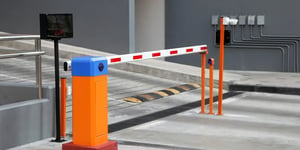
How a Parking Operator Improved Payment and ANPR Connectivity Across 38 Locations with Multi-Carrier Cellular
Parking infrastructure increasingly depends on connectivity.
Payment kiosks need to authorize transactions. ANPR cameras need to send vehicle data. Barrier controllers need to communicate with management platforms. Occupancy systems need to report availability. Operations teams need remote access when equipment stops responding.
For a distributed parking operator, relying on a single cellular network across every garage, surface lot, and street-level location created an avoidable point of failure.
In this representative deployment scenario, a parking operator uses POND IoT multi-carrier cellular connectivity, centralized SIM management, and private networking options to connect payment terminals, ANPR systems, and parking infrastructure across 38 locations.
The architecture reduced dependence on individual mobile carriers while giving the operations team greater visibility and remote access across its parking estate.
The Client
The operator manages a growing portfolio of parking facilities across multiple metropolitan markets.
Its locations range from open-air surface lots to multi-level parking garages serving:
- Commercial properties
- Residential developments
- Retail centers
- Transportation facilities
- Mixed-use developments
- Event locations
Each property has different physical infrastructure and network conditions.
Some locations have wired broadband available.
Others rely primarily on cellular connectivity.
Some parking garages have excellent cellular service near entrances but substantially weaker coverage deep inside concrete structures.
Despite those differences, every location needs access to the operator's central parking-management systems.
As the portfolio expanded, connectivity became an increasingly important part of parking operations.
The Challenge: Modern Parking Systems Need More Than Power
A parking payment terminal can be physically operational while being commercially unusable.
If connectivity fails, a customer may be standing in front of a working kiosk that cannot authorize a card transaction.
The same issue applies across other parking infrastructure.
An ANPR camera can continue capturing images while being unable to transmit the required data.
A barrier controller can remain powered while losing access to a remote management system.
An occupancy sensor can continue detecting vehicles while the central platform stops receiving updates.
For the operator, the underlying problem was simple:
connected parking infrastructure was only as useful as the network connecting it.
Single-Carrier Connectivity Worked Differently at Every Location
The operator initially used cellular service from a preferred mobile carrier across much of its parking estate.
At some locations, performance was strong.
At others, the same carrier experienced:
- Weak indoor signal
- Poor coverage on lower garage levels
- Congestion during busy periods
- Intermittent packet loss
- Local network maintenance
- Carrier-specific outages
The problem became more visible as the company expanded into additional markets.
A carrier that performed well at one parking facility could perform very differently several miles away.
Standardizing hardware was relatively straightforward.
Standardizing a single cellular network was not.
The POND IoT Solution
The operator implemented a standardized cellular architecture using POND IoT connectivity across its parking portfolio.
The deployment centered on four capabilities:
Multi-carrier LTE/5G connectivity
Centralized SIM management
Static addressing where required
Private networking for controlled remote access
Instead of forcing every location onto the same mobile network, the connectivity strategy could adapt to conditions at each parking facility.
Layer 1: Multi-Carrier Cellular Connectivity
POND multi-carrier SIMs gave compatible parking equipment access to multiple supported cellular networks rather than restricting each deployment to one carrier.
This was particularly valuable across a geographically distributed estate.
A carrier with the strongest connectivity at a downtown garage was not necessarily the strongest provider at:
- An airport-area surface lot
- A suburban retail center
- An underground residential garage
- A university parking facility
The operator could deploy a common connectivity strategy while retaining network flexibility at individual sites.
Layer 2: Connectivity for Payment Terminals and Parking Equipment
Depending on the facility design, cellular connectivity could be provided directly to compatible equipment or through an onsite cellular router.
Connected systems included:
- Parking payment kiosks
- Pay-on-foot terminals
- Gate systems
- Barrier controllers
- ANPR gateways
- Management appliances
- Digital signage
- Other IP-connected parking infrastructure
At locations where multiple devices needed connectivity, the cellular router acted as the WAN connection for the local parking network.
This allowed several systems to share a managed connectivity architecture rather than requiring an independent connection for every device.
Layer 3: Static IP and Private Networking
Some locations required more than outbound internet connectivity.
The operator's technical team needed controlled remote access to selected routers and parking systems for troubleshooting and administration.
Where required, the deployment used persistent private addressing and a controlled private-network architecture.
This provided predictable network identities for remote sites without requiring parking equipment to be openly exposed to the public internet.
The exact design varied according to:
- Parking hardware
- Network-security requirements
- Remote-access requirements
- Existing VPN architecture
- Site topology
Not every parking device required a static IP.
Static addressing was used where it solved an actual operational requirement.
Layer 4: Centralized SIM Management
As the parking portfolio grew, managing connectivity one SIM at a time became impractical.
The operator needed visibility across the deployment.
Centralized connectivity management allowed the team to review information such as:
- SIM status
- Data usage
- Connectivity activity
- Assigned devices
- Deployment locations
- Network behavior
- Plan utilization
This helped the operator distinguish between an equipment problem and a connectivity problem before dispatching field personnel.
How the Parking Connectivity Architecture Works
1. Parking Equipment Connects to the Local Network
Payment terminals, ANPR equipment, barrier controllers, and other systems communicate through the parking facility's local network architecture.
2. Cellular Provides the WAN Connection
A POND-connected router or compatible device establishes cellular connectivity through an available supported network.
3. Parking Systems Communicate with Central Platforms
Authorized traffic can reach payment, parking-management, monitoring, or enterprise systems according to the deployment architecture.
4. Network Conditions Change
If the current mobile network becomes unsuitable or unavailable, a multi-carrier configuration can provide additional network options according to the SIM, hardware, and deployment policy.
5. Operations Retain Remote Visibility
Where remote-access architecture is implemented, authorized technicians can reach permitted network resources without visiting the parking facility.
6. Connectivity Is Managed Centrally
The operations team can monitor connectivity across distributed parking locations instead of treating every SIM as an isolated service.
The Results
After implementing POND IoT multi-carrier connectivity, the parking operator had a more resilient network architecture across its garages and surface lots, reducing dependence on a single mobile carrier at each location.
Greater Payment Connectivity
Payment terminals had access to a more flexible cellular connectivity model, reducing the likelihood that a carrier-specific issue would completely interrupt payment operations at a site.
More Reliable Multi-Location Coverage
The operator could use a standardized connectivity approach across its portfolio while still accounting for differences in carrier performance from one parking facility to another.
Improved Remote Visibility
Operations teams could more easily determine whether a problem was related to the cellular connection, local network, payment terminal, or another system before dispatching a technician.
Fewer Connectivity-Related Site Visits
More network issues could be investigated remotely, reducing the need to send field personnel to parking facilities for connectivity troubleshooting alone.
Reduced Dependence on a Single Carrier
Multi-carrier connectivity gave the operator additional network options when coverage or performance varied across garages, surface lots, and different metropolitan areas.
Results at a Glance
38
Parking Locations
84%
Fewer Connectivity-Related Payment Terminal Incidents
96%
of Eligible Network Issues Diagnosed Remotely
63%
Fewer Connectivity-Related Field Visits
16 of 38 Sites
Benefited From a Different Cellular Network
One Connectivity Strategy
Across Garages and Surface Lots
Key Takeaways
Parking payment infrastructure depends on network availability.
A powered-on terminal can still be unable to process payments when connectivity is unavailable.
The best carrier can vary between parking locations.
Network performance at one garage does not predict performance across an entire portfolio.
Multi-carrier connectivity reduces single-network dependency.
Additional supported networks give parking operators more flexibility when conditions change.
Remote visibility reduces unnecessary field visits.
Operations teams can investigate connectivity before sending someone to the parking facility.
Static IP and private networking solve a different problem than basic connectivity.
They can support controlled remote access when parking infrastructure needs to be reachable.
Underground coverage still requires proper RF design.
Multi-carrier connectivity provides more network options but cannot compensate for a location where no usable cellular signal exists.
Ready To Get Started?
Parking operators increasingly depend on connected infrastructure to process payments, identify vehicles, control access, monitor equipment, and manage distributed locations.
That infrastructure should not depend unnecessarily on a single cellular network.
POND IoT provides multi-carrier LTE/5G connectivity, static IP options, private networking, centralized SIM management, and flexible deployment support for parking systems operating across garages, surface lots, and other unattended environments.
Whether you're connecting payment kiosks at a single facility or standardizing connectivity across a national parking portfolio, POND can help design the connectivity architecture around your equipment, locations, security requirements, and operational priorities.